Gremban & Gremban Dental

Improving your smile

office
phone
  • 865 North Railroad Street
    Eagle River, WI 54521
  • (715) 479-6100

Our Blog

How safe are dental X-rays?

September 30th, 2026

Drs. Darrin and Greg Gremban and our staff rely on digital X-rays to help us diagnose oral conditions and process images at incredibly high speeds. You can also view digital X-rays in real time while we examine your mouth with an intraoral camera and upload the images to a software program. A chairside computer monitor lets you see these images as we refine areas of concern to ensure an accurate diagnosis.

But are dental X-rays safe?

Yes! They emit 80 percent less radiation than exposure-type X-rays and provide detailed images to improve diagnosis and treatment. We can now detect dental problems in their earliest stages without subjecting you to unnecessary radiation. The amount of radiation released by digital X-rays is “negligible,” which means the amount is so small, that it can be safely disregarded.

Safe enough for children and pregnant women, digital X-rays detect microscopic pitting in tooth enamel and other abnormalities in the oral tissues that might have remained undetected with traditional X-rays. When Drs. Darrin and Greg Gremban and our staff discover dental caries in their earliest stages, we can initiate treatment measures that will effectively prevent cavity development, tooth decay, and potential tooth loss.

Patient appointment lengths are shortened with digital X-rays as well, because images are immediately viewable and do not require the exposure time associated with old-style X-rays.

How Digital X-Rays Differ from Traditional X-Rays

Instead of using cardboard-contained film, we insert a small sensing device about the size of a pen in your mouth and engage the digital X-ray machine by manually manipulating control buttons. Within seconds, images appear on the monitor that can later be stored in your file or sent to another doctor for further examination.

The increased resolution afforded by digital X-rays means that patients are able to understand the seriousness of their dental issues better, and are more inclined to follow through with procedures recommended by Drs. Darrin and Greg Gremban.

Safer, Better and Faster

For detection of cancerous tumors in their early states, digital X-ray technology offers vast improvements over film X-rays because of its cutting-edge image processing capability. Early detection of oral cancer and dental caries is the best way to prevent any type of oral health problem from exceeding the treatable stage.


Sunbeams and Beaming Smiles

August 5th, 2026

Long days in the sun’s rays offer you lots of options for outdoor activities. Beach time? Vacation? Open-air concerts? Baseball, biking, board sports? No matter what plans you have for these sunny days in Eagle River, we have some tips to keep your smile beaming.

Use Sunscreen

Sunscreen is good for all ages and skin tones, and it’s also designed to protect your smile. Lip tissue is thin and delicate, and can easily be damaged by the ultraviolet rays which cause skin cancer and premature aging. 

If your regular sunscreen isn’t suitable for your lips, there are many protective lip balms designed especially for your smile.

  • Make sure you get the proper level of protection. Dermatologists recommend lip balms with a minimum SPF (Sun Protection Factor) of 30.
  • Reapply at least every two hours, and sooner if your lips get wet or if you’re eating or drinking.

Protect Your Smile with a Mouthguard

Mouthguards help protect your teeth from damage caused by impact, whether from hard surfaces or hard elbows! Any time there’s a chance of a fall or a collision, a mouthguard is a good idea. Use your guard for:

  • Biking, in-line skating, skateboarding, or any activity where an unexpected fall is possible 
  • Contact or low-contact sports like baseball, basketball, and soccer, where bodies collide with equipment or other bodies

If you play organized sports, you might already own a mouthguard. If not, talk to Drs. Darrin and Greg Gremban about over-the-counter options or a custom-fitted model. And if you wear braces, no need to stay indoors! There are mouthguards designed to protect your teeth, cheeks, lips, and braces. Ask the team at Gremban & Gremban Dental for recommendations.

Hydrate

On hot days, our brains help regulate our body temperature. How? By sending the signal to start sweating! Some heat is transferred from our bodies to evaporate perspiration, which helps cool the skin. But that cooling perspiration comes at a cost—the water we lose through sweat can lead to dehydration. 

Water is essential for our health, and especially when it’s scorching outside. Drinking water throughout the day is healthier than drinking lots of water at one time, and your doctor can let you know the right amount of water for your body, since we’re not all built the same. A bottle of water doesn’t contain artificial ingredients, caffeine, or sugars, so it’s a great, healthy outdoor companion. 

More? Water is also great for your smile!

  • Water washes food particles and bacteria away from teeth and gums for fresher breath and a healthier mouth.
  • Most communities add fluoride to their water, and fluoride strengthens tooth enamel to help you fight cavities. If your local water supply isn’t fluoridated, talk to your dentist about other treatments which can provide fluoride’s cavity protection.
  • Hydrating helps prevent dry mouth. Normal saliva production doesn’t just keep the mouth moist for eating and speaking—it also protects our teeth and gums as it washes away food particles and helps counteract excess acidity in the mouth.

It’s easy to get distracted with summer activities and vacations—after all, they’re designed to be distracting! But don’t let your well-deserved fun in the sun distract you from your regular dental care. 

Regular dental exams catch small problems before they become larger ones, and cleanings make sure your smile is bright all summer long. If you’re overdue for a visit to Gremban & Gremban Dental, make room in your schedule for a checkup.

Summer can be a time to relax, renew, and recharge. While you’re enjoying those extra hours of sun, take care of your oral health for a beaming smile which will look great on you any time of year!

Forget Something? It’s on the Tip of Your Tongue!

July 29th, 2026

Let’s see…

Toothbrush? Check.

Fluoride toothpaste? Check.

Floss? Check.

Two minutes of thorough brushing? Check.

Careful cleaning around your brackets and wires? Check.

Wait… there’s something else… it’s right on the tip of your…

Ah! Your tongue! Whenever you brush, morning, evening, or any time in between, if you want the freshest breath and cleanest teeth, don’t forget your tongue.

Why your tongue? Because the tongue is one of the most common sources of bad breath. Let’s examine just why this occurs.

The tongue is made up of a group of muscles that help us speak and chew and swallow. But there’s more to this remarkable organ than mere muscle. The surface of the tongue is covered with mucous membrane, like the smooth tissue which lines our mouths. But the tongue isn’t completely smooth—it’s textured with thousands of tiny bumps called papillae.

These little elevated surfaces have several shapes and functions. Some make the tongue’s surface a bit rough, which helps move food through your mouth. Some are temperature sensitive, letting you know that your slice of pizza is much too hot. And some are covered with thousands of the taste buds, which make eating that pizza so enjoyable.

All of these papillae with their various functions combine to create a textured surface, filled with miniscule nooks and crannies. And if there’s a nook or a cranny where bacteria can collect, no matter how miniscule, it’s a good bet that they will, and the surface of the tongue is no exception. But bacteria aren’t alone—the tongue’s surface can also hide food particles and dead cells.

How does this unappealing accumulation affect you? These elements work together to cause bad breath, especially the bacteria that break down food particles and cell debris to produce volatile sulfur compounds—compounds which create a particularly unpleasant odor. Including your tongue in your brushing routine helps remove one of the main causes of bad breath.

And that’s not the only benefit! Cleaning the tongue helps eliminate the white coating caused by bacterial film, and might even improve the sense of taste. Most important, studies show that regular cleaning noticeably lowers the levels of decay-causing plaque throughout the mouth.

So, how to get rid of that unwanted, unpleasant, and unhealthy debris?

  • When you’re done brushing your teeth, use your toothbrush to brush your tongue.

Clean your tongue by brushing gently front to back and then side to side. Rinse your mouth when you’re through. Simple as that! And just like a soft-bristled toothbrush helps protect tooth enamel and gum tissue, we also recommend soft bristles when you brush your tongue. Firm bristles can be too hard on tongue tissue.

  • Use a tongue scraper.

Some people find tongue scrapers more effective than brushing. Available in different shapes and materials, these tools are used to gently scrape the surface of the tongue clean of bacteria and debris. Always apply this tool from back to front, and rinse the scraper clean after every stroke. Wash and dry it when you’re through.

  • Add a mouthwash or rinse.

As part of your oral hygiene routine, antibacterial mouthwashes and rinses can assist in preventing bad breath. Ask Drs. Darrin and Greg Gremban for a recommendation.

  • Don’t brush or scrape too vigorously.

Your tongue is a sturdy, hard-working organ, but tongue tissue is still delicate enough to be injured with over-vigorous cleaning.

Taking a few extra seconds to clean your tongue helps eliminate the bacteria and food particles which contribute to bad breath and plaque formation. Make this practice part of your daily brushing routine—it’s a healthy habit well worth remembering!

Should I have TMD treated? Why?

July 22nd, 2026

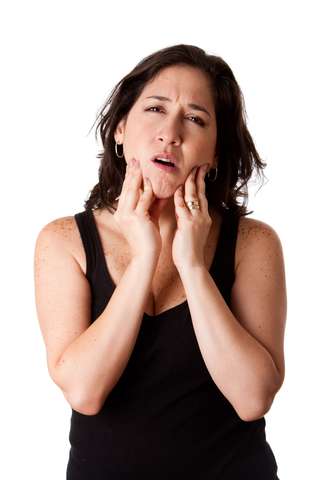
TMD occurs when your bite is not properly aligned. It can cause the jaw to experience unnatural stresses and prevent it from resting properly when your mouth is closed. If you have TMD, you may have noticed a clicking noise when you chew, speak, or yawn; you may even experience pain and discomfort during these actions. In some cases, your jaw may feel “locked” following a wide yawn.

TMD can cause pain and discomfort in the jaw as well as headaches that occur when the muscles that help the joints open and close become overtired. But beyond the pain and discomfort, TMD can also cause serious dental problems if left untreated.

Because TMD is associated with a poor bite or malocclusion (which literally translated means “bad closure”), your teeth do not meet properly. As a result, extra tension and stress may be placed on your teeth, resulting in chips and cracks that allow cavities to form and may even result in tooth loss. Over time, TMD can cause teeth to break, which requires cosmetic treatment to rebuild your healthy smile, and ensure the broken tooth and its neighbors are protected from decay.

While treating TMD used to mean expensive and invasive surgery to reposition or even rebuild the jaw joints, today’s approach at Gremban & Gremban Dental is much more patient-friendly. By restoring broken, chipped, or cracked teeth, replacing missing teeth, and using braces or other dental devices, Drs. Darrin and Greg Gremban and our team can help realign your jaw so it’s able to function properly, and eliminate pain and discomfort. And there’s more good news: By restoring damaged teeth and tooth surfaces and straightening crooked teeth, you’re also left with a more attractive smile once treatment is completed.

Every patient is different, and that means your course of treatment will be different too. After a thorough examination of your teeth and jaw, our experienced staff at Gremban & Gremban Dental will work with you to develop a treatment plan that will have you feeling better – and looking better – sooner than you ever expected. Don’t let your untreated TMD cause more pain and problems; give us a call at our convenient Eagle River office today to schedule a consultation.

Back to top