Gremban & Gremban Dental

Improving your smile

office
phone
  • 865 North Railroad Street
    Eagle River, WI 54521
  • (715) 479-6100

Our Blog

Root Canal FAQs

January 4th, 2018

Most people hear the word root canal and panic. With today’s state of the art equipment and improved local anesthetic devices, and some knowledge, a root canal does not have to cause panic. Root canals are a common dental procedure, done quite often at our Eagle River office.

Why do I need a root canal?

There are several reasons why Drs. Darrin and Greg Gremban may suggest a root canal including:

  • An infection in your tooth that has reached the nerves
  • A deep cavity that cannot be filled because the pulp and nerves are also effected
  • Injury to the tooth
  • A deep cracked tooth
  • Broken tooth
  • Repeated fillings of the effective tooth

What is a root canal?

A root canal is a dental procedure that is used to prevent the loss of a tooth and relieve pain. Inside your teeth is pulp which consists of soft tissue blood, connective tissue, blood vessels, and nerves. When the pulp becomes infected, swollen or diseased a root canal is necessary to save your tooth. During a root canal, Drs. Darrin and Greg Gremban will remove the infected pulp. The tooth’s root canals and pulp chamber of your tooth will be cleaned, so all the diseased pulp is removed and then your tooth will be sealed.

What to Expect During a Root Canal

Your root canal will start out just like any other dental procedure. We will go over any questions you may have, and then numb the area surrounding the tooth. After the area is numb the root canal will begin.

The amount of time it takes to do your root canal varies depending on number of roots that need to be cleaned. Most teeth have one root canal, while others have between two and four. For a single canal, the procedure usually lasts less than an hour. The more canals your tooth has the longer amount of time it will take and in some cases, you will require more than one visit.

How much pain will I have after a root canal?

Once the local anesthesia wears off, your pain can be controlled by over the counter pain medications such as Ibuprofen, Naproxen, or Acetaminophen. In some cases, Drs. Darrin and Greg Gremban may prescribe a prescription dose of pain medication. Within two days you should be feeling much better and able to return to your regular lifestyle.


Smile, the New Year is Almost Here!

December 28th, 2017

We’ve been celebrating the new year for a really, really long time. It goes way back, but it started formally in 1582, when Pope George XIII made January 1st the official holiday for ushering in the new year. The idea was to yell, cheer, and blow horns to scare away all the evil spirits of the previous year with the hope that the new one would be filled with happiness and opportunity.

While scaring away evil spirits isn’t what’s on our mind these days, we still ring in the New Year by cheering and hollering with friends and family. It’s a time to set new goals, refocus on old ones, and look forward to all the surprises the coming year will bring.

Whether you’re saying hello to the New Year snuggled up at home on your couch in the Eagle River area or by gathering your friends for a social celebration, here are some tips to help ensure you welcome this new chapter with a smile.

Tips for a great New Year’s Eve celebration from Gremban & Gremban Dental

  • Stay safe. This one’s vital, because nothing puts a damper on your party like an emergency trip to the hospital. Stay responsible and try to plan ahead, whether that means taking a taxi, staying with a friend, or recruiting a designated driver. Do what you have to do to keep yourself and everyone around you safe.
  • Spend time with the people you love most. The way we see it, the whole point of the holiday season is to cherish your family and friends. Regardless of what you’re doing, make sure there’s something for everyone. It’s essential to do something the whole group will enjoy!
  • Smile! Whether you get all dressed to go out or have a quiet gathering with family and friends, make sure you accessorize with a smile. There’s always something to smile about!

We can all agree that change can be scary sometimes, but ringing in the New Year is an observance we all welcome with open arms. We hope you’ll enjoy this transitional holiday in a fun, healthy, and safe way. You have endless possibilities ahead of you!

From Drs. Darrin and Greg Gremban, have a fantastic New Year!

Improve Your Oral Health with CEREC®

December 21st, 2017

You can improve your oral health with CEREC, the most technically advanced tooth restoration method available today. Broken, worn, decayed, misshapen, or otherwise damaged teeth do not function well and are difficult to clean. This means imperfect teeth do more than ruin your smile; even one bad tooth can negatively affect your oral health.

If you are like millions of people with broken, slightly crooked, or misshapen teeth, you have a hard time cleaning in all the nooks and crannies around these teeth. This leaves these areas vulnerable to buildup of bacteria and plaque that can lead to painful gum infections and tooth decay.

Dentists often perform dental restorations, using synthetic materials to create crowns and fillings that restore the tooth’s shape and size, strength, and improve its appearance. Dental restoration reduces those hard-to-clean nooks and crannies, making it easier for you to maintain good oral hygiene. Dental crowns can even protect a tooth from further decay, halting oral disease in its tracks.

CEREC® to Improve Your Oral Health

CEREC is one of the most revolutionary ideas in dental restorations that improve oral health. CEREC is an acronym, short for CEramic REConstruction. The system uses a special camera, computer, and an in-office milling machine to create restorative pieces in just one office visit.

To use the CEREC system, Drs. Darrin and Greg Gremban and our team use the camera to take a 3D picture of your teeth and mouth. The camera then sends the images to the computer, where we use the information to create your new dental crown or other restoration. The milling machine then creates the actual restoration used to restore your imperfect tooth or teeth.

Because CEREC restorations are computer generated, they fit better than traditional crowns and restorations. This superior fit leaves fewer gaps for bacteria to hide, reducing your risk for gum disease and tooth decay. Drs. Darrin and Greg Gremban can perform CEREC in just one office visit, so you never leave your teeth vulnerable to bacteria while you wait for days or weeks for your conventional crown to come back from the lab.

Make an appointment at our Eagle River office today to learn how you can improve your oral health with CEREC.

What should I use to clean my baby’s teeth?

December 14th, 2017

You might think babies don’t need to brush their teeth, especially when they don’t have any. But by starting good habits like brushing when your child is young, you can lay the foundation for them to continue those good habits into adulthood.

When do I start?

The best time to start brushing your baby’s teeth is before he or she has any. Develop the habit of wiping your baby’s gums with a wet, soft washcloth or gauze every day. There is no need to use toothpaste, just wrap the gauze or cloth around your finger, moisten it with a little water, and gently rub it over the gums.

This helps your little one get used to brushing while it eliminates bacteria in the mouth that can harm emerging teeth. You don’t need to apply a lot of pressure or even take very long: just a quick, gentle rub over the gums will do it.

What do I use?

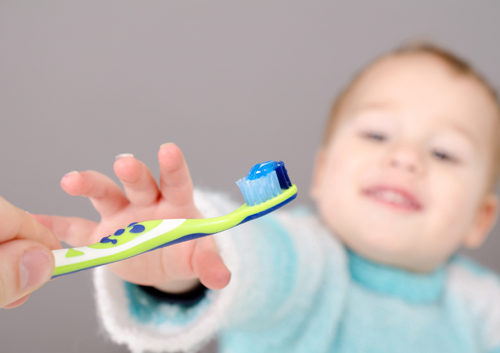
When your child’s teeth begin to come in, you will need to switch from a cloth to a baby toothbrush. Find one that has a grip big enough for your hand, but a head that is small enough to maneuver easily in your infant’s mouth.

You don’t need to use any toothpaste until your son or daughter is about a year old. Even then, though, you’ll want to use just a tiny amount: about the size of a grain of rice. When your toddler is about two years old, you can use a pea-sized amount.

By around six years of age, your child will probably rinse and spit without your help. At that point, you may want to introduce a child-friendly fluoride mouthwash.

How do I do it?

Your child probably won’t be able to brush his or her teeth alone until about the age of five or six. This means that you will need to do it. To brush your child’s teeth, gently use the brush over all the teeth and gums, even areas where the teeth have not come in yet.

As your child grows and becomes more independent, you can allow him or her to hold the toothbrush while you guide your child’s progress. Make sure you talk to your child while you are brushing, and explain why you brush: what you are doing and how you are doing it.

In addition to regular visits with Drs. Darrin and Greg Gremban, instilling good oral health habits in your child early on will ensure a lifetime of good dental health.

Back to top