
Gremban & Gremban Dental

Improving your smile

office
phone
  • 865 North Railroad Street
    Eagle River, WI 54521
  • (715) 479-6100

Our Blog

What are the benefits of visiting a dentist regularly?

August 17th, 2017

Your regularly scheduled dental checkups with Drs. Darrin and Greg Gremban are not just meant to make your smile prettier and healthier. Your mouth’s health has an important impact on your overall physical health as well!

While you may brush your teeth twice a day and even floss, we would like to remind you that dental checkups with Drs. Darrin and Greg Gremban every six months aren’t just about addressing problems and reacting, they are about cavity and gum disease prevention.

In addition to a twice yearly thorough teeth cleaning and polishing at Gremban & Gremban Dental, these regular visits help us detect and prevent the onset of tooth decay and gum disease. During your visit, we’ll check the health of your mouth, teeth, gums, cheeks, and tongue. We’ll also check old fillings and restorations, as these can wear away over time from constant chewing, grinding, or clenching.

It’s important to know that the majority of dental problems do not become visible or painful until they are highly advanced. And, unfortunately, serious oral issues are painful and expensive to treat.

While Drs. Darrin and Greg Gremban and our team always strive to provide unmatched dental care for you and your family, we are also committed to your overall wellness as well! A deep cleaning twice a year is the best way to prevent any problems that may have gone unseen. If you are overdue for your next cleaning, please give us a call to schedule an appointment at our Eagle River office!

Ease up on your gums — don’t brush your teeth too hard!

August 10th, 2017

A lot of patients go at their teeth like they were sanding an old floor—that is to say, way too hard! Brushing too hard is probably the most common mistake patients make in their oral care routine, and it can be detrimental to the gums and teeth.

What can brushing too hard cause?

  • Receding gums
  • Bone loss around teeth
  • Loss of teeth
  • Tooth sensitivity, especially to hot and cold
  • Worn down enamel

Brushing too hard wears away at your gums, which can lead to the neck of the teeth being exposed. This part of the tooth isn't covered by hard enamel like the rest of the tooth and hence the soft inner layer, or dentin, is exposed. Dentin is very sensitive to hot and cold and much more susceptible to bacterial decay. Once the gums recede due to improper brushing, it’s usually irreversible.

How to brush your teeth properly

You know you're supposed to brush your teeth twice a day, so why not do it right? First and foremost, you should only ever brush with a soft bristled brush—not medium or hard—unless directed otherwise by Drs. Darrin and Greg Gremban. Unless you have braces or specific oral health issues, brushing twice a day for two minutes is usually plenty.

The main purpose of brushing is to remove plaque from your teeth and gums. Plaque is actually soft and is a buildup of bacteria, saliva, and food debris. You really don't need to brush hard to remove it, just make sure you aim your toothbrush at the gum line (where plaque grows) and brush in small circular motions, never a back-and-forth motion.

It's also wise to hold your toothbrush gently. People tend to brush harder the tighter they hold their toothbrush.

Still have questions about proper tooth brushing technique or gum health? Ask any staff member or Drs. Darrin and Greg Gremban during your next visit to our Eagle River office; we'd be happy to help!

Four Oral Health Issues Seniors Face

August 3rd, 2017

Oral health is an important and often overlooked component of an older person’s general health and well-being. Drs. Darrin and Greg Gremban and our team know that for many of our older patients, oral health can become an issue when arthritis or other neurological problems render them unable to brush or floss their teeth as effectively as they once did. Today, we thought we would discuss four common oral health issues our older patients face and how they can avoid them:

Cavities: It’s not just children who get tooth decay—oral decay is a common disease in people 65 and older. Ninety-two percent of seniors 65 and older have had dental caries in their permanent teeth, according to the National Institute of Dental and Craniofacial Research. The risk for tooth decay increases because many older adults don’t go to the dentist as often as they used to, thus cavities go undetected and untreated for longer than they should. Keeping regular appointments with Drs. Darrin and Greg Gremban is the key to getting cavities treated in a timely manner.

Difficulty eating: Oral health problems, whether from missing teeth, cavities, dentures that don’t fit, gum disease, or infection, can cause difficulty eating and can force people to adjust the quality, consistency, and balance of their diet.

Dry mouth: Also called xerostomia, dry mouth is a common issue for a lot of seniors. Our friends at the Oral Cancer Foundation estimate that 20 percent of elderly people suffer from dry mouth, which means the reduced flow of saliva (saliva plays a crucial role in preventing tooth decay). Many seniors are on multiple medications for a variety of chronic illnesses or conditions. Common medications taken that may cause dry mouth are decongestants, antihistamines, blood pressure medications, pain pills, incontinence medications, antidepressants, diuretics, muscle relaxers, and Parkinson’s disease medications. To help counter this, we suggest drinking lots of fluids and limiting your intake of caffeine and alcohol. We also encourage you to check with Drs. Darrin and Greg Gremban during your next visit if you think your medications are causing your mouth to feel dry.

Gum Disease: Gum (periodontal) disease is an infection of the gums and surrounding tissues that hold teeth in place. While gum disease affects people of all ages, it typically becomes worse as people age. In its early stages, gum disease is painless, and most people have no idea that they have it. In more advanced cases, however, gum disease can cause sore gums and pain when chewing.

Gum disease, which can range from simple gum inflammation to serious disease, is usually caused by poor brushing and flossing habits that allow dental plaque to build up on the teeth. Plaque that is not removed can harden and form tartar that brushing simply does not clean. Only a professional cleaning at our office can remove tartar. The two forms of gum disease are gingivitis and periodontitis. In gingivitis, the gums become red, swollen, and can bleed easily; in periodontitis, gums pull away from the teeth and form spaces that become infected.

Proper brushing, flossing, and visiting our office regularly can prevent gum disease. Seniors with limited dexterity who have trouble gripping a toothbrush should ask Drs. Darrin and Greg Gremban about modifying a handle for easier use or switching to a battery-powered toothbrush.

How to Care for a CEREC® Restoration

July 27th, 2017

Our Eagle River office often provides CEREC for patients who need tooth restorations. Quite simply, patients love their new smiles. And they love the durable, easy-to-care-for natural of CEREC.

For many people, a CEREC restoration is like getting a childhood smile back again -- only more brilliant than ever before.

After treatment, Drs. Darrin and Greg Gremban and our team hear a lot of questions about how to keep the repaired smile looking fresh and clean. Keep these tips in mind:

Talk to us: Please don’t leave our office with any unanswered questions about your new restoration. Let us know if you have any concerns about diet, tooth and gum care, or if you feel any discomfort.

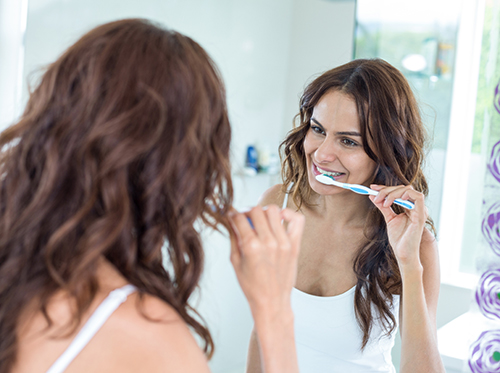
Check your smile: People who aren't thrilled with their smiles often avoid looking at their teeth and gums. You may be in the habit of brushing and flossing without even checking the mirror.

With a new smile, the mirror becomes your friend again. Use the mirror when you clean your teeth to make sure you've removed all visible food particles. Check your gumline for redness or tender areas.

Chew things over: Your CEREC restoration should provide a very normal and comfortable eating experience. In fact, if your teeth were giving you problems while eating, the treatment should help relieve the discomfort. If you still experience pain or chewing feels uncomfortable, call our office and let us know.

Brush and floss: CEREC dental restorations need the same care as your natural teeth. Keep brushing and flossing after meals. Use a mouthwash if you prefer or if we recommend one for gum care. Follow any special advice the doctor or the hygienist gives you during your exam.

Finally, make sure to come see us every six months for a cleaning and exam. Caring for your CEREC restorations is that simple, and has the added benefit of helping keep teeth and gums in good shape, too.

Back to top