Gremban & Gremban Dental

Improving your smile

office
phone
  • 865 North Railroad Street
    Eagle River, WI 54521
  • (715) 479-6100

Our Blog

Fluorosis: What is it?

January 22nd, 2025

Many people think dental fluorosis is a disease, but it’s not; it’s a condition that affects the appearance of your tooth’s enamel, not the function or health of the teeth. These changes may vary from tiny, white, barely noticeable spots to very noticeable staining, discoloration, and brown markings. The spots and stains left by fluorosis are permanent and may darken over time.

Dental fluorosis occurs in children who are excessively exposed to fluoride between 20 and 30 months of age. Only children ages eight years and younger can develop dental fluorosis. Why? That is the period when permanent teeth are still developing under the gums. For kids, fluorosis can cause significant embarrassment and anxiety about the appearance of their teeth. No matter how much they might brush and floss, the fluorosis stains do not go away.

Many well-known sources of fluoride may contribute to overexposure, including:

  • Fluoridated mouth rinse, which young children may swallow
  • Bottled water which is not tested for fluoride content
  • Inappropriate use of fluoride supplements
  • Exposure to water that is naturally or unnaturally fluoridated to levels well above the recommended levels

One way to reduce the risk for enamel fluorosis is to teach your children not to swallow topical fluoride products, such as toothpaste that contains fluoride. In fact, kids should use no more than a pea-sized amount of fluoride toothpaste when brushing, and children under the age of two shouldn’t use fluoride toothpaste at all.

Dental fluorosis can be treated with tooth bleaching, microabrasion, and conservative composite restorations or porcelain veneers. Please give us a call at our office to learn more or to schedule an appointment with Drs. Darrin and Greg Gremban.

Make Tooth Brushing Fun

January 15th, 2025

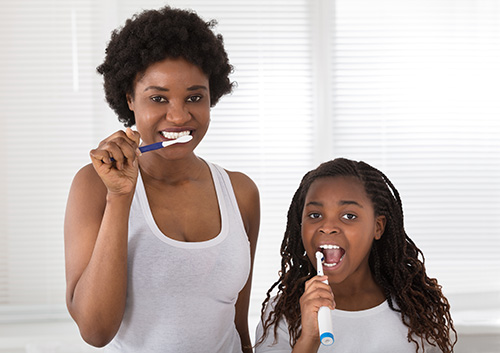
The best brushing routine for parent and child is two minutes of gentle brushing in the morning and two in the evening. But if the longest four minutes of your day are spent helping your child brush and floss, here are some suggestions for making that time fly.

Options!

Children’s brushes come in a wonderful variety of colors, patterns, and shapes. Allow your child to choose a favorite the next time you go shopping for dental supplies. Just make sure to choose a soft bristle brush with a head designed for small mouths. And since toothbrushes generally wear out after three months, your child will have plenty of opportunities to pick and choose! You might also explore the many flavors of children’s toothpaste to find the one that your child finds most appealing, and let your young brusher squeeze out a dab on that new brush.

Reward Daily Brushing

You don’t have to go to great lengths to make your son or daughter feel rewarded for a job well done. Allowing children to pick out a story for you to read or posting colorful stickers on a calendar sheet will encourage them to get into the habit of brushing.

Two-Minute Countdown

Time seems to go faster when we’re having fun. Your child might enjoy listening to songs or stories for the two minutes of brushing time. You can make your own playlist, invent a story starring your child, or make use of one of the dental apps that offer children’s music, videos, and stories in perfect two-minute segments.

Do It Together

Spend these two minutes twice a day with your child. You will be doing all the brushing at first, of course, but as your children get older, brush your teeth along with them. You can model proper brushing techniques for cleaning teeth, gums and tongue, and even let your child have a chance to brush your teeth for a change.

Don’t Forget Checkups!

Scheduling checkups and professional cleanings at our Eagle River office is vital to maintaining your child’s oral health. And, if your son or daughter is keeping up with good hygiene at home, these visits should be a breeze!

The habits your child develops now will be the foundation for a lifetime of oral health. Make these four minutes a day count. And if you can create ways to make them fun, those four minutes will fly by for both of you!

How can veneers improve my smile?

January 8th, 2025

Drs. Darrin and Greg Gremban and our team at Gremban & Gremban Dental know your smile is an important part of your appearance; it can be a source of pride or embarrassment. Everyone deserves beautiful, straight teeth that complement their features, but few are born with natural dental perfection. Fortunately, cosmetic dentistry has come a long way in recent years, with veneers making it possible to make over your smile completely.

With dental veneers, the smile of your dreams can become a reality. These thin, wafer-like shells are crafted of porcelain and completely customized to fit your smile. Once your tooth size, shape, and color have been determined, veneers are adhered to the surface of your natural tooth, instantly transforming your appearance. What used to be a secret of the rich and famous is now highly accessible to dental patients around the world.

Benefits of dental veneers

Appearance

Dental veneers are very natural in appearance and virtually undetectable to other people. Their non-porous surfaces make them resistant to staining, which ensures they do not change color over time.

Improvements

Dental veneers can be used to improve the appearance of many kinds of imperfections. In fact, an entirely new smile can be crafted from veneers, to cover up chipped teeth, discoloration, and gaps between teeth.

Durability

Veneers are long-lasting cosmetic enhancements that can survive many years with appropriate care and maintenance. They are specially fabricated to be resistant to scratches and chipping, which makes them a practical solution for the average person.

Flexibility

Dental veneers are highly adaptable. You can opt for only a single veneer to repair a chipped or cracked tooth, or you can modify multiple teeth at once for a smile makeover.

Considerations

Keep in mind that cosmetic treatments like dental veneers are secondary to primary dental care. You must have healthy teeth and disease-free gums to be a candidate for cosmetic procedures. An initial consultation at our convenient Eagle River office will reveal any underlying decay or other problems that must be addressed prior to getting veneers. Give us a call today!

Caring for Your Night Guard

December 25th, 2024

You might have experienced painful morning headaches. Or have a partner or housemate who begged you to please keep those grinding noises down at night. Or perhaps you were unhappily surprised to find that your teeth had mysteriously become worn, loose, or cracked.

So you made an appointment at our Eagle River office. And you learned that you needed a night guard designed to protect your teeth from the damage done by night time bruxism—that grinding and clenching which is hard on enamel, bad for teeth, and painful for jaws. Good work!

Your night guard prevents your teeth from making contact, saving teeth and enamel from injury. It distributes the pressure placed on your teeth, muscles, and bones when your jaws clench through the night. Bonus: it can reduce nocturnal noises caused by grinding.

Guards are available over-the-counter in general sizes, or a custom night guard can be created for you by Drs. Darrin and Greg Gremban. Custom guards are uniquely fitted to your teeth and jaw, and last longer than over-the-counter models. Whichever kind of appliance you choose, daily care is a must for a long and healthy partnership.

To make sure you get the best and longest use from your night guard, there are some easy steps to keep it in top shape when it’s off-duty.

  • Keep It Clean

Plaque and bacteria can build up on your night guard just as they can on your tooth enamel. Rinse your guard in the morning and brush it gently. Ask Drs. Darrin and Greg Gremban about using toothpaste, because toothpastes, especially abrasive toothpastes, can scratch your appliance. And don’t forget to clean your case!

Every week, or as directed, your night guard will benefit from a more serious cleaning. Follow the instructions for your appliance, whether it’s using cleaning tablets, a soaking solution, or another recommended cleanser. Your dentist can suggest how, how long, and how often to treat your night guard to a deep cleaning, because using the wrong products or cleaning methods can damage it.

  • Keep It Dry

Putting a damp night guard into a closed case, even a ventilated one, provides an ideal setting for bacteria growth. Before you put your guard away, give it time to air-dry on a clean surface.

  • Keep It Safe

Once your guard is clean and dry, make sure it keeps its shape and stays intact by keeping it in its clean, dry case when you’re not using it. Night guards and their cases are no fans of sun, extreme heat, very hot water, or (gulp!) dishwashers. A misshapen, melted, or broken night guard should not be used. If your night guard is damaged, it’s time to call us.

Spending just a moment or two each day caring for your night guard will result in a long-lasting appliance and many hours of healthy and comfortable sleep. Your night guard is protecting you. Be sure to return the favor for a long and healthy dental partnership.

Back to top