Gremban & Gremban Dental

Improving your smile

office
phone
  • 865 North Railroad Street
    Eagle River, WI 54521
  • (715) 479-6100

Our Blog

Women's Hormones and Oral Health

November 22nd, 2023

At Gremban & Gremban Dental, we know that hormones affect a woman's mood, but did you know they can also impact the health of a woman’s mouth? Women are susceptible to gum disease at different times in their lives, and research shows that hormonal highs and lows are part of the problem. According to studies, there are five situations in women’s lives during which hormone fluctuations make them more susceptible to oral health problems: puberty, their menstrual cycles, pregnancy, menopause, and birth control pill usage. So just what happens and how can you help protect your oral health? Drs. Darrin and Greg Gremban and our team have outlined the five hormonal situations and provided a few tips and tricks to fending off potential issues.

Puberty - The surge of hormone production that occurs during puberty can increase the blood flow to the gums and change the way gum tissue reacts to irritants in plaque. As a result, a woman's gums may bleed during the act of brushing and flossing.

Monthly menstruation cycle - Hormonal changes (especially the increase in progesterone) occur during a woman’s menstrual cycle. These changes can lead to red swollen gums, swollen salivary glands, canker sores, or bleeding gums.

Pregnancy - Hormone levels tend to fluctuate during pregnancy. As a result, women are at greater risk to develop a condition called gingivitis, the early form of gum disease. Drs. Darrin and Greg Gremban may recommend more frequent professional cleanings during your second or early third trimester to help reduce the chance of developing gingivitis. Please let us know if you are pregnant during your visit.

Menopause - Women are known to experience numerous oral changes as they age. These oral changes can include greater sensitivity to hot and cold foods and beverages, a burning sensation in your mouth, or dry mouth. Dry mouth, also known as xerostomia, can result in the development of tooth decay and gum disease because saliva is not available to moisten and cleanse the mouth. It is important to know that dry mouth can also result from many prescription and over-the-counter medications. The gradual loss in estrogen that occurs with menopause also puts older women at risk for loss of bone density, which can lead to tooth loss. Receding gums, which expose more of the tooth surface to potential tooth decay, can be a sign of bone loss in the jawbone.

Birth control pills - Some birth control pills contain progesterone, which increases the level of that hormone in the body. Women who take pills with progesterone may develop inflamed gum tissue due to the toxins produced from plaque. Be sure to tell us if you are taking an oral contraceptive during your visit.

To prevent gum disease, we recommend:

  • Brushing your teeth at least twice a day with a toothpaste containing fluoride
  • Flossing at least once a day
  • Eating a well-balanced diet
  • Avoiding sugary or starchy snacks

Drs. Darrin and Greg Gremban and our team at Gremban & Gremban Dental encourage you to visit our Eagle River office and practice good oral health habits at home.
The Consequences of Sports and Energy Drinks

November 15th, 2023

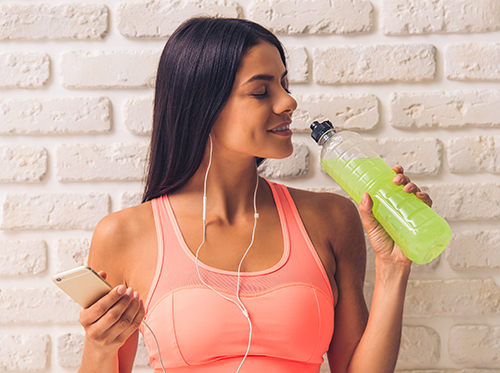
They’re refreshing and tasty. They’re easy to find and pretty cheap. They help us get through a long day or a long workout. They’re everywhere.

We know it’s hard to say no to an energy or sports drink. That’s why Drs. Darrin and Greg Gremban and our team want to make sure you know the effects that energy and sports drinks can have on your smile and overall oral health. You might just think twice next time you crave one.

There’s a common misconception that sports and energy drinks are somehow healthier than soda beverages. None is particularly good for you, but because sports and energy drinks have higher acidity levels, they put you on a fast track to enamel erosion, which can lead to cavities over time. However, studies show that energy drinks may be the worst of the bunch.

In a study published in General Dentistry, the energy drinks that showed the highest acidity levels were 5-hour Energy, Monster, Rockstar, and Red Bull Sugar free. These drinks almost doubled in acidity when compared to sports drinks. The sports drinks that came in second as far as acidity levels go were Powerade, Gatorade, and Propel.

You may be thinking, “What's the big deal; lots of other drinks damage your teeth, too,” and you’re right. Even all-natural beverages like orange juice and other fruit juices, which are advertised as full of vitamins, contain acid that damages tooth enamel. The point here is that moderation is key.

We certainly encourage you to choose a glass of orange juice over an energy drink, but if you feel like you just can’t give up your sports and energy drink habit, then please consider the following tips:

  • Limit yourself to a certain number of said beverages a week and stick to it.
  • Rinse with water after consuming an energy or sports drink.
  • Brush your teeth after an hour of downing the drink, so your mouth has time to return to its normal pH level.

If you have any questions, don’t hesitate to give us a call at our Eagle River office. Shoot us a message on Facebook, or let us know on your next visit!

I don't brush while I'm at work. Should I?

November 15th, 2023

Yes, absolutely. A recent survey by Oral-B® reveals that despite knowing that a healthy, good-looking smile affects not only their personal wellness but their professional image as well, very few people (only 14 percent) brush and floss at the office regularly. What’s more, three quarters of people who responded to the survey said they ate twice or more a day at work.

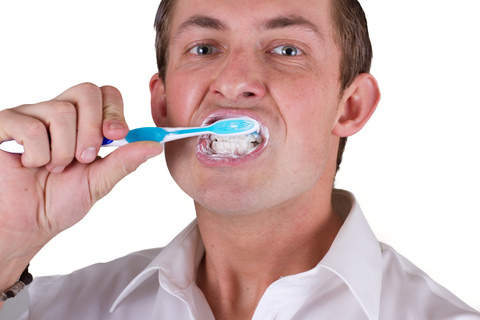
Today, Drs. Darrin and Greg Gremban and our team thought we would provide some tips for brushing at work.

  • Leave a toothbrush at work to increase your likelihood of brushing
  • Brush your teeth twice a day with fluoride toothpaste. Replace your toothbrush every three or four months, or sooner if the bristles are frayed. A worn toothbrush won’t do a good job of cleaning your teeth.
  • Clean between teeth daily with floss or an interdental cleaner; this helps remove plaque and food particles from between the teeth and under the gum line. Tooth decay-causing bacteria still linger between teeth where your toothbrush bristles can’t reach.

And remember to brush for 30 to 45 seconds across visible parts of the teeth. Brushing after breakfast or lunch will eliminate any remaining food particles and odors. We recommend people brush their teeth twice and floss once a day to remove plaque and other harmful bacteria.

To schedule your next appointment with Drs. Darrin and Greg Gremban at our Eagle River office, please give us a call!

The Science of Sugar

November 8th, 2023

Some languages have many different words for love. Some have many different words for snow. One language even has different words for a tasty layered sandwich. Is that a hoagie or a hero you’re having? A sub? Grinder? Po’boy?

“Sugar,” though, is a single word which has taken on many meanings, from casual endearment to monosaccharide molecule. Today, we’re examining scientific definitions, with a short and sweet look at the science of sugar.

Chemistry

First, let’s get basic—all the way down to the molecular level.

Carbohydrates, fats, and proteins are the three essential macronutrients which keep our bodies running. Sugars are molecules made of carbon, hydrogen, and oxygen atoms, and all carbohydrates are made of these sugar molecules, from single unit structures to very complicated chains.

Sugars called monosaccharides are the most basic of the carbohydrates. “Monosaccharide” comes from the Greek words for “single” and “sugar,” and monosaccharides are the sugars we mean when we talk about “simple sugars.” Why are they simple? Because a monosaccharide is a single molecule which can’t be broken down into smaller carbohydrates.

While there are several types of monosaccharides, the three major simple sugars are:

  • Fructose—the sugar we get from fruit.
  • Galactose—the sugar found in milk.
  • Glucose—the sugar our bodies use the most. It’s found in plants, and also produced when our bodies break down other carbs. Fun fact—this is the only sugar essential for brain cell function.

When two monosaccharide molecules join together, they form a disaccharide (not surprisingly, from the Greek for “two sugars”). Again, there are quite a few disaccharides, but we tend to concentrate on three in our diets:

  • Lactose (glucose + galactose)—found only in milk and dairy products.
  • Maltose (glucose + glucose)—the sugar chiefly produced by grains.
  • Sucrose (glucose + fructose)—produced in plants. These plants include sugar cane and sugar beets, from which we get our refined table sugars.

The reason sugar molecules are so important is because of how our bodies use them.

Biology

Our bodies use the glucose in carbs for energy. As foods break down, first through digestion and then in the cells, the chemical bonds which hold glucose molecules together break as well. This action releases energy, and this energy fuels all our bodily functions.

But even though we need carbohydrates to keep our bodies going, and even though sugars are the easiest carbs to use for energy, there’s a reason no one recommends a diet filled with extra sugar.

Our bodies get all the sugar they need from the natural sugar in the foods we eat. Natural sugars are found in fruits, dairy products, even some vegetables and grains. Along with that sugar come vitamins, minerals, antioxidants, fiber, and/or protein.

Extra sugars added during baking or mixing or processing for flavor and sweetness provide none of these nutrients. These sugars are known as “added sugars,” and have more serious consequences than just empty calories.

Once we have the sugars we require, there’s no need for more. Extra sugars are stored in liver, muscle, and fat cells for later use. When we eat too much sugar, this carefully balanced system is upset, with negative effects for, among other things, weight, blood sugar, insulin levels—and our dental health.

Nutrition and Dental Health

You know that a sugar-filled diet often means a cavity-filled checkup. Why? Because it’s not just our bodies that break down sugar for fuel.

The oral bacteria in plaque also need sugars for food, which they use to make acids. An acidic environment in the mouth weakens and dissolves the minerals which keep tooth enamel strong. And these weak spots are vulnerable to decay. A steady diet of sugar-filled foods means that your enamel is constantly under acid attack.

Cutting down on added sugars is one of the easiest and best ways to cut down on added cavities. Reading recipes, checking out labels, learning to recognize added sugars—this is nutritional research which has sweet results.

How to recognize added sugars? Here’s where language gives us plenty of words to fill our linguistic sugar bowl. Whether the ingredients are called agave nectar, honey, molasses, syrups, treacle, or table sugar, they’re really just sugar. More specifically, they’re all sugars made up of glucose and fructose, with at best a trace amount of vitamins and minerals—and usually not even a trace!

To make our lives easier, labels on food packaging now let us know exactly how much of the sugar in any product is “added sugar.” You expect to find a high percentage of sugar on dessert labels, but you might be surprised to read how much sugar is added to foods like energy drinks, sports drinks, flavored yogurts, cereals, spaghetti sauce, and many more of the items in your grocery cart. Spend an extra minute examining the label, and save yourself many empty calories.

Monosaccharides, disaccharides, glucose, fructose, maltose, agave syrup, treacle, and on and on—so many words for so many kinds of sugar. When it comes to dental health, let Drs. Darrin and Greg Gremban have the last word on sugar science. During your next visit to our Eagle River office, talk to us about reducing unnecessary sugars in your diet for a future filled with the sweetest of healthy smiles.

Back to top