Gremban & Gremban Dental

Improving your smile

office
phone
  • 865 North Railroad Street
    Eagle River, WI 54521
  • (715) 479-6100

Our Blog

Is a Crown Necessary for My Child’s Baby Tooth?

September 20th, 2023

Part of the charm of your child’s smile is those delicate, diminutive baby teeth. We enjoy those smiles while we can, because soon enough, primary teeth make way for the adult teeth that will last your child a lifetime. So you might be surprised if Drs. Darrin and Greg Gremban and our team recommend a crown for your child’s baby tooth. Is this procedure necessary when the tooth is going to fall out eventually anyway?

Yes, it really is. If a primary tooth is lost before its normal lifespan, several problems can arise.

  • Biting and chewing—a full set of baby teeth is best for proper chewing and digestion. And chewing also helps develop face and jaw muscles.
  • Speech development—primary teeth help guide speech production and pronunciation.
  • Spacing—a baby tooth serves as a place holder for the adult tooth waiting to replace it. If a primary tooth is lost too early, teeth may drift from their correct location and cause overcrowding or misalignment.

When is a Crown Necessary?

The enamel in a baby tooth is thinner than the enamel found in adult teeth, and a cavity can spread quickly throughout a tooth. Within a short period, the tooth’s structure might be too weak for a regular filling. Sometimes the pulp inside the tooth becomes injured or infected and an endodontic treatment is necessary to remove pulp tissue from inside the tooth. The interior will be filled, but the delicate enamel surrounding it will be fragile. Or an accident can leave a tooth fractured or broken, but still vital.

In each of these cases, a crown will protect the tooth from further decay or damage, and will allow the tooth to function normally until an adult tooth is ready to replace it.

What Types of Crowns are Available?

By far the most common choice for a primary tooth is a stainless steel crown. These crowns are prefabricated and can be fitted snugly to your child’s individual tooth. They are easy to place, less expensive than other crown alternatives, and will last until the tooth is ready to fall out in its proper time. If your child suffers from a metal allergy, or a more natural looking crown is necessary, talk to us about other possible options during your appointment at our Eagle River office.

Sure, preserving a baby tooth that was never designed to be permanent seems contradictory. But saving a tooth that helps your child develop proper eating habits, speech production, and correct adult tooth alignment? Those are benefits that will last a lifetime.


How do I know if I need dentures?

September 20th, 2023

The choice to get dentures is a permanent decision so there are several important factors you should take into consideration. Many people have teeth that are not able to be repaired due to a variety of reasons, but for those who have the option and the money to repair their natural teeth they need to consider every choice they may have.

You have a choice!

Yes, it’s true! We do have a choice about whether we will have to have dentures in the future. Many people don’t realize that just by taking certain precautions they can actually prevent any serious issues from arising. For example, it’s very easy to reschedule that dental cleaning. However, it’s very important that you keep every appointment because Drs. Darrin and Greg Gremban will be able to catch small problems before you even realize you have them. Also, if there are any signs of gum disease you will know early enough to stop any further damage. One of the main reasons that many people end up needing dentures is because of either gum disease or because severe cavities have cause too many teeth to be extracted.

If you notice any of the following you should make an appointment at our Eagle River office right away:

  • Teeth are moving further apart
  • Soreness or tenderness of the gums
  • Trouble eating hard food
  • Sensitivity
  • You have already lost several teeth
  • Toothaches

The key to avoiding dentures is prevention. Avoiding dentures is not impossible and can be as simple as staying on top of your oral hygiene. However, if you are currently experiencing any dental issues you should see Drs. Darrin and Greg Gremban now, because a small problem can quickly escalate into a very large and expensive dental procedure.

When Is a “Cavity” Not a Cavity?

September 13th, 2023

Is this a trick question? After all, you probably already know quite a lot about cavities:

  • It all begins when bacteria-filled plaque sticks to teeth and starts to attack enamel. How?
  • Because the bacteria in plaque use the sugars and other foods we eat to produce acids.
  • These acids gradually weaken teeth by dissolving minerals which help make up our enamel (a process called demineralization).
  • Over time, a hole, or cavity, develops in the tooth surface.
  • Left untreated, bacterial decay can spread to the inside of the tooth, creating a more serious cavity.

Some cavities aren’t discovered until you visit our Eagle River office, but sometimes there are clear signs that there’s a problem.

  • You have tooth pain or sensitivity.
  • Your tooth changes color in spots where the enamel has decayed.
  • You might even notice enamel loss when a cavity is large enough.

So, if you have any of these symptoms, it’s a cavity, right? It might be—but it might not. Sometimes, because the symptoms are similar, what we suspect is a cavity is really enamel erosion.

The bacteria-created acids weaken enamel. But it’s not just bacteria that subject our teeth to acids—we do it ourselves with our choice of food and drink. Acidic foods are one of the leading causes of tooth erosion.

Our normal saliva pH level is around a 7, which is neutral. Any number lower is acidic; any number higher is alkaline. Acidic foods have a low pH (the pH of lemon juice, for example, measures between 2 and 3), and can reduce our normal, neutral pH level. When saliva pH levels drop to 5.5 or lower, tooth enamel starts to demineralize, just as it does when exposed to the acids from oral bacteria.

Regularly snacking on citrus and other acidic fruits, wine, fruit juices, flavored teas, sour candies, and other acidic foods can cause enamel erosion. Especially erosive are sports drinks, energy drinks, and colas, because they contain some combination of citric acid, phosphoric acid and/or carbonation.

The symptoms of tooth erosion and damaged enamel can be very similar to those caused by cavities:

  • You suffer tooth pain or sensitivity
  • Your teeth appear discolored, as the enamel thins to reveal the yellowish dentin underneath
  • You notice missing enamel—your teeth become rounded or have little pits known as cupping

You call Drs. Darrin and Greg Gremban right away if you suspect a cavity. Be just as proactive if you suspect erosion. Even though your symptoms may not have been caused by plaque and bacteria, acidic erosion from your diet leaves weakened enamel just as vulnerable to cavities and decay.

How to avoid erosion?

  • Enjoy acidic foods sparingly, or as part of a meal. This helps your saliva pH stay in the neutral zone.
  • Balance acidic foods with low-acid choices to help neutralize acids and restore a normal pH balance. (A good reason to pair wine or fruits with cheese.)
  • Use a straw! This simple solution keeps erosive drinks from bathing your teeth in acids.
  • Drink water instead of an acidic beverage, or drink it afterward to rinse your mouth. The pH of pure water? A perfect, neutral 7.
  • And what about brushing right after eating or drinking something acidic? Ask Drs. Darrin and Greg Gremban if you should rush for your brush. We may recommend waiting 30 minutes or so after an acidic treat to give teeth time to remineralize after acids weaken them. Otherwise, brushing might cause more wear and tear on your enamel.
  • Finally, while foods are often the source of acid erosion, medical conditions can cause erosion as well. Talk to us about ways to minimize erosion while addressing your medical needs.

There’s no trick to it—watching your diet, brushing and flossing as recommended, using a fluoride toothpaste, and visiting Gremban & Gremban Dental for regular checkups will help prevent tooth erosion. We can restore eroded enamel with bonding, veneers, or crowns if the erosion is serious. Better still is to catch erosion before symptoms appear to keep your teeth their strongest for a lifetime of healthy, beautiful smiles.

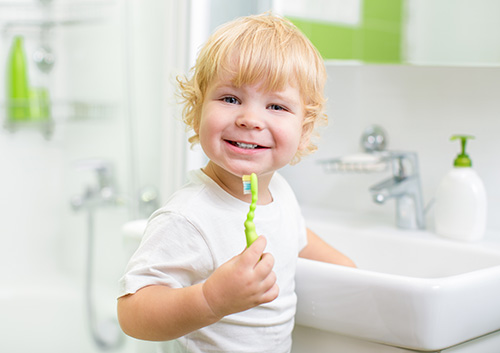
What kind of toothbrush and toothpaste should my child use?

September 13th, 2023

Drs. Darrin and Greg Gremban and our team know that as a parent, you want your child to be as healthy as possible. By now, you probably know that your son or daughter’s oral health plays a huge role in overall health.

When there are so many toothpaste ads and different styles of brush to choose from, it can be difficult to know which will serve your child the best. We recommend you break down the decision process to make it simpler.

First, your child’s age and stage of development are vital to consider. Until about the age or 12, your youngster may not be prepared to brush or floss adequately alone, due to dexterity issues. If that’s the case, it can be easier to use a battery-powered toothbrush to improve the quality of brushing.

Next is to select the right size of toothbrush head to fit your child’s mouth. As a general rule, the head of the toothbrush should be a little larger than the upper portion of the child’s thumb.

Flossers are great for children and easy to use. They have handles and a horseshoe shape on one end with floss in between. Your child can choose a color he or she likes as well as the handle size, shape, etc.

Not only are there many brands of toothpaste to choose from, there are also many different ingredients that offer varying benefits. Kids are at high risk for developing cavities so you want to make sure the following ingredients are in your child’s toothpaste if you wish to avoid problems later on.

Sodium fluoride is the standard ingredient for cavity prevention, while stannous fluoride is anti-bacterial and anti-cavity. Anti-sensitivity toothpastes often contain potassium nitrate, and triclosan can be found in one particular brand for anti-bacterial action.

Fluoride should not be ingested, so if your child can’t spit yet, use a toothpaste that contains xylitol. This is a natural sweetener and should be the first ingredient listed on the tube.

Now comes the fun part: choosing a flavor! Your little one may sample different flavors and select the one he or she likes the best. A youngster is more likely to adopt good brushing habits if the flavor is appealing.

Don’t hesitate to speak with Drs. Darrin and Greg Gremban if you need to make an appointment at our Eagle River office, or if you have any questions about toothpastes or toothbrushes.

Back to top