Gremban & Gremban Dental

Improving your smile

office
phone
  • 865 North Railroad Street
    Eagle River, WI 54521
  • (715) 479-6100

Our Blog

Should You Be Concerned about Your Child’s Bad Breath?

May 31st, 2023

The short answer to this question? Yes. Because your child’s breath is a reflection of his or her oral health, you should talk to Drs. Darrin and Greg Gremban if you notice any unpleasant changes. While better dental hygiene is usually the answer for young children, bad breath can also be a symptom of more serious problems.

Oral Hygiene

Most often, bad breath is simply a sign that your child needs a little help developing proper brushing and flossing habits.

  • Show your child how to use a soft-bristled brush that fits in the mouth comfortably, be sure to brush all the surfaces of each tooth, and don’t forget to angle toward the gum line. And brush long enough. Once all the baby teeth have arrived, two minutes of brushing is usually recommended for children.
  • It’s not too early to floss! Adults need to handle the flossing duties for children until they can manage on their own, so it’s a perfect time to teach technique. And, just like toothbrushes, floss should be flexible and soft.
  • Don’t forget the tongue. Our tongues harbor the bacteria that cause bad breath, so finish off your child’s routine with a gentle brush of the tongue.

Better oral habits mean not only fresh breath, but give those baby teeth the best chance of staying healthy until they are naturally replaced by adult teeth. After all, baby teeth not only help your child learn to eat and speak properly, but they act as necessary placeholders so the permanent teeth are able to erupt in exactly the right spot.

Talk to a member of our Eagle River office team at your child’s next appointment if you are concerned about oral hygiene–they have many great suggestions for making brushing and flossing more efficient, comfortable, and even fun for your child.

Periodontal Health during Pregnancy

May 31st, 2023

Congratulations! Your pregnancy is a time of joy and excitement—and a time to take special care of yourself. You’ve discovered that pregnancy brings many physical changes, but it may still come as a surprise to learn that pregnancy hormones can affect your oral health as well. What should you look out for?

Gingivitis

Beginning in the second or third month of pregnancy, your gum tissue may show signs of gingivitis. Pregnancy hormones can cause an increase in the blood supply to your gums and affect the way your gums respond to plaque. These changes may lead to gums that are swollen, red and more likely to bleed upon brushing. This early form of gum disease should be treated as quickly as possible to avoid a more serious condition called periodontitis.

Periodontitis

Without treatment, the inflammation caused by gingivitis can increase. Periodontitis can lead to gums pulling away from the teeth, creating “pockets” that can be home to infection. These infections can lead to bone and tooth loss, so professional treatment is a must.

Pregnancy Granulomas

If you find a dark red swelling along the gumline or between two teeth, it might be a pregnancy granuloma. These granulomas are thought to be triggered by pregnancy hormones and may be a reaction to plaque or some other irritant. They often disappear once your baby is born and usually don’t cause any bother, but if you develop discomfort eating or speaking, your dentist might suggest removal.

You are looking for every way possible to provide your baby with the best start in life, so it is important to know that some studies have suggested a link between periodontal disease in pregnancy and complications such as pre-term delivery and low birth weight. Here are some important ways to maintain your oral health during pregnancy:

  • Call Drs. Darrin and Greg Gremban when you find out you are pregnant. We have suggestions for your dental care that you can use immediately.
  • Keep to your regular schedule of dental examinations and cleanings at our Eagle River office. If you find your gums beginning to show signs of gingivitis, call our office for an appointment. You might need to have your teeth cleaned more often during your pregnancy to avoid plaque buildup.
  • Maintain your daily dental hygiene. Be sure to carefully brush along the gumline to discourage plaque formation. If you have not switched to a soft bristle toothbrush, now is the time! Talk to us about possible rinses or other at-home treatments.
  • See a periodontist if needed for more serious gum problems.

Your pregnancy is a time to treat yourself and your baby with care. Talk to our office as soon as you find out you are pregnant. Making your dental health a priority can bring rewards both now and in the future, and we welcome the opportunity to suggest the best possible ways to care for yourself and your baby!

Teeth Grinding

May 24th, 2023

It might seem like you’ve gotten a great night’s sleep—but why aren’t you well rested? Worse, why are you waking up with:

  • A headache
  • Ringing in your ears or an earache
  • Pain in your jaw
  • Worn or sensitive teeth
  • Dry mouth or mouth and cheek injuries
  • An unhappy partner who’s been kept awake all night?

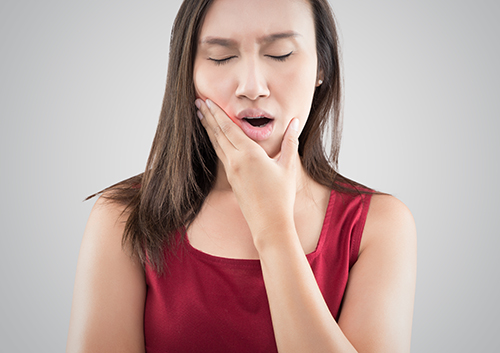
If you suffer from any or all of these symptoms, you might be one of the millions of people who have a sleep-related disorder called bruxism, better known as teeth grinding.

There are any number of causes that have been linked to bruxism. Stress and other negative emotions seem to trigger episodes, as can lifestyle habits such as smoking and drinking alcohol or caffeine. Sleep apnea can lead to grinding your teeth, or you could have bite or tooth alignment problems. Certain medications might set off this disorder, and some studies have shown a hereditary tendency in families. Whatever the reason you grind your teeth, there are many important reasons to stop as soon as you can.

As bad as the nagging headaches and earaches that can accompany bruxism can be, long-term damage to your teeth can develop over time. With continuing grinding pressure on the teeth, enamel is worn away prematurely. Teeth can crack or chip. They may loosen or develop sensitivity to heat, cold, and pressure. Gum tissue can recede or become inflamed. Dental restorations can be cracked or broken.

If you—or someone in your house—suspects that you are grinding your teeth at night, give our Eagle River office a call! We can recommend relaxation techniques, diet changes, or tips to help you relax your jaw. Drs. Darrin and Greg Gremban might suggest a nightguard, a custom-fitted appliance worn while you sleep, to reduce the impact of grinding. There are options available. Let’s work together to make every night’s sleep a restful, healthy one.

Detergent Foods: Clean your teeth while you eat!

May 24th, 2023

Did you know that there are certain foods you can eat which help to clean your teeth? We call them "detergent foods." In dentistry we look at the impact of food in three ways: the kind of food, how often it is eaten, and when it is eaten. Detergent foods should be the last piece of food you consume during a meal for best results. Think of them as the closest you can get to brushing your teeth.

A healthy diet is important for oral health as well as overall health, but here are some particular foods that can help clean your teeth and mouth:

  • Carrots
  • Apples
  • Celery sticks
  • Popcorn
  • Cucumbers
  • Pears
  • Lettuce
  • Cheese

As you can see, detergent foods are usually foods that are firm and crisp. They act like scrubbers on and around your teeth and gums and bring your mouth's pH back to 7.0, which is optimal.

Which foods are the worst for your teeth?

Cookies, cakes, breads, chips, crackers, soft drinks, dried fruit, and candies (what many people’s diets are full of) provide carbohydrates (sugar) to the bacteria in your mouth causing an acidic environment and increasing the chance of cavities and decay. These foods are sticky and don't rinse easily from your mouth. Avoid letting these foods sit on your teeth after eating them.

It also depends on how often you consume these foods throughout the day. For example, if you drink soft drinks, it's best to have it all in one sitting instead of sipping it all throughout the day. Doing so causes the perfect environment in your mouth for bacteria to flourish and your saliva never gets the chance to neutralize its pH.

This is where detergent foods can come into play. When you're about to finish your meal, have an apple, celery stick, or carrot. It will act like a "natural toothbrush." Also, try to make these detergent foods the basis for snacks you have throughout the day.

Always remember, these foods are not a replacement for brushing and flossing. You still need good dental hygiene regardless of what you're eating! For more tips and tricks for ideal oral health, ask Drs. Darrin and Greg Gremban the next time you visit our Eagle River office!

Back to top