Gremban & Gremban Dental

Improving your smile

office
phone
  • 865 North Railroad Street
    Eagle River, WI 54521
  • (715) 479-6100

Our Blog

Keep Those Teeth Shipshape, Matey!

September 7th, 2022

September 19th is just around the corner, and you know what that means—Aye, matey, it’s “Talk Like a Pirate Day”! Why do we have a “Talk Like a Pirate Day” and not a “Take Care of Your Teeth Like a Pirate Day”? You don’t need a treasure map to find the answers!

  • High Seas Hygiene

The toothbrush as we know it, with easy to clean nylon bristles, was invented less than 100 years ago. Even toothbrushes with animal bristles weren’t easily available until a century after pirates sailed the seas. If pirates brushed at all, they probably used rags or twigs with frayed ends to clean their teeth. And rags and twigs just can’t take care of plaque the way careful brushing and flossing can.

Two minutes brushing in the morning and two minutes at night, with careful flossing each day, will help keep your teeth as white as a chest of pearls—and healthy to boot!

  • Dastardly Diet

Pirates were a scurvy lot—literally. Scurvy is a disease caused by a lack of vitamin C, a vitamin found in fresh fruits and vegetables. One of the many unpleasant symptoms of scurvy is bleeding, swollen gums. As you can imagine, months at sea on a pirate ship provided very few chances for fresh fruit and vegetables. As a result, sailors often had to live with gum pain and even tooth loss from serious gum disease.

We now know that eating a healthy diet is a key to oral health. In fact, it was a British naval doctor who discovered that bringing oranges, lemons, and limes aboard sailing vessels prevented scurvy—but sadly for our pirate crew, this discovery happened several decades after the Golden Age of Piracy. Fortunately, you have access to a bounty of fresh fruit and vegetables. Eat a diet rich in vitamins and minerals, and your teeth and gums will be all the better for it.

It’s not looking too good for our pirate crew, but let’s look on the bright side—even if a pirate did get a cavity or suffer gum disease, he could always see the ship’s dentist, couldn’t he?

  • Ship’s Dentist—Arrrr You Kidding?

If a pirate had a bad cavity, his best treatment option would probably be to ask a fellow pirate to pull the tooth. If a pirate needed a root canal, his best treatment option would probably be to ask a fellow pirate to pull the tooth. If a pirate had a cracked tooth, his best… well, you get the picture.

Luckily, it’s a different world today. Now we have dentists with years of education and training, modern tools and equipment, and the very best medical knowledge to treat all of our dental problems, big and small. See your dentist at least twice a year for exams and cleanings, and you will reap the bountiful rewards of regular, professional, proactive care.

Being a pirate for a day is fun. We all enjoy tales of a good treasure hunt. But you already have a treasure that most pirates could never hope to have—healthy teeth and healthy gums! And with proper care, this treasure can last a lifetime. Until next September 19th, fair winds and good checkups at our Eagle River office be yours, matey!

Does Your Filling Need Replacing?

August 31st, 2022

No matter how wonderfully something works for us, there comes a day when a replacement might be necessary. This holds true whether it’s the latest and greatest smart phone, or your perfectly prescribed eyeglasses, or your discreet and comfortable dental filling.

Wait, dental filling?

It’s true! While most dental fillings will last for many trouble-free years, there might come a time when a replacement is in order. Here are some signs to look for:

  • Obvious Damage

Your teeth are under a lot of stress. The forces of biting and chewing place hundreds of pounds of pressure on teeth and jaws. And if you grind your teeth, your teeth are really getting a workout. What’s true for your teeth is true for your fillings. Over time, fillings can break down after years of this constant pressure.

If you notice a filling has become loose, or is cracked, or is pulling way from the edges of the tooth, give your dentist a call! A timely replacement can prevent decay from forming under the filling. Which leads us to . . .

  • Pain in a Filled Tooth

When a filling is damaged, it no longer protects the dentin and pulp inside the tooth as effectively.

Why? Because your toothbrush can’t reach beneath your filling—but cavity-causing bacteria can. This means that cavities can develop underneath a filling that’s loose or damaged. Hidden decay will eventually progress into the pulp area of the tooth, which could lead to infection, root canal treatment, or even extraction.

If you’re suffering from pain or sensitivity in or around a tooth, it’s important to see your dentist right away to rule out hidden decay or other serious conditions.

  • Cosmetic Concerns

Composite resin fillings are often used on front teeth because they can be carefully color-matched to our enamel for an almost invisible restoration. Over time, though, you might discover your composite filling has become quite a bit more visible.

Just like our enamel, composite fillings can become stained over time from foods like coffee and red wine, and from smoking. Does a discolored filling need replacement? If the filling is damaged, or if decay is present, yes. If the problem is surface cosmetic staining, Drs. Darrin and Greg Gremban might be able to restore the original color of your filling with polishing. If you’re concerned about the color of your filling, talk to us about all of your options.

  • Your Dentist Recommends Replacement

Part of each dental examination includes checking the condition of your restorations. If we notice a loose or damaged filling, or find decay beneath a filling, it’s time for a replacement.

You have more options that ever before when it comes to dental fillings. Gold fillings and silver amalgam fillings last from ten to 15 years or even longer, and are capable of withstanding chewing pressure and filling larger cavities. Composite fillings, although they might not last quite as long, are almost unnoticeable and perfect for visible teeth. Your dentist will recommend the filling which is best suited for your needs.

If you wait to replace a cracked or compromised filling, you’re taking a chance with the health of your tooth. Dental fillings provide years of durable, comfortable wear—but if it’s time for a replacement, don’t hesitate to call our Eagle River dental office for an appointment.

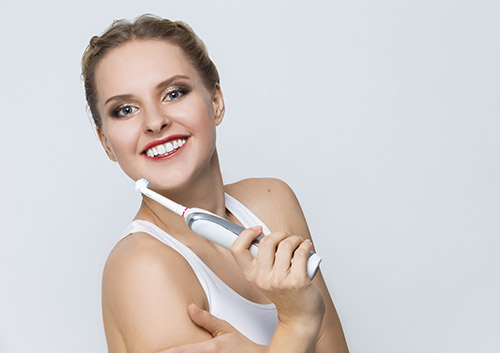
Clean Toothbrush/Healthy Toothbrush

August 24th, 2022

We’ve all learned a lot about keeping healthy lately. Thorough hand washing, disinfecting cell phones and keyboards, wiping down shopping carts and door handles—all these low-maintenance cleaning habits can have a high impact on our health.

So, in that spirit, let’s talk about low maintenance cleaning routines for something you put in your mouth at least twice a day—your toothbrush.

Brushing Habits

Don’t let germs hitch a ride on your toothbrush before you even begin! Make sure your hands are clean before brushing, and rinse off your toothbrush before you put it in your mouth.

After brushing, be sure to rinse your brush carefully to get rid of leftover toothpaste, food particles, and other debris. And don’t forget to clean your toothbrush holder regularly. Talk to Drs. Darrin and Greg Gremban or your hygienist when you visit our Eagle River office for suggestions for deep cleaning brushes to eliminate bacteria if that’s a concern.

And while we’re talking about germs, how about…

  • Flushing Habits

Most toothbrushes share their living space with another bathroom essential—the toilet. Every time we flush, microscopic particles are propelled through the air. And while no definitive relationship has been shown between flushing and disease transmission, closing the toilet lid before flushing is an easy way to reduce unpleasant particle transmission—and reduce the possible risk of toothbrush contamination.

  • Airing? Yes!

Keeping a toothbrush in a dark, moist environment is the perfect setting for bacterial growth. Instead, let your toothbrush air dry after use in an upright position. Give it a shake first for a head start on the drying process.

  • Sharing? No

We’re not talking about sharing a brush, which you would never do. We’re talking about sharing toothbrush holders. If your brush touches other brushes, you’re probably sharing germs as well as space, which can be especially problematic if someone in the house has immune concerns. Toothbrushes shouldn’t be too close to other toothbrushes, no matter how close you are to the other brush’s owner!

Finally, no matter how well you take care of your toothbrush, there comes a time when you must part with even the cleanest and best-maintained of brushes. After three or four months, bristles become frayed. This means you’re not getting the most effective plaque-removal from your brush. And to be on the safe side, consider retiring your toothbrush if you’ve been ill.

Dental self-care is a vital part of keeping yourself healthy, and a clean toothbrush is a simple way to support your oral health. High impact/low maintenance—win/win.

Does chronic stress impact periodontal health?

August 17th, 2022

Many studies over the past several years have focused on this question. Since we will all face stressful situations during our life, it is a good question to ask. This question also delves into the mind-body connection—the psychological having an effect on the physical and vice versa.

Studies were performed as far back as the 1940s and continue today. Many of them have shown that stress "downregulates" or hinders cellular immune response. The most common periodontal diseases related to this stress-induced downregulation are gingivitis and periodontitis.

It is believed that stress and depression contribute to a state of chronic inflammation within the body. Stress also raises levels of cortisol in your body, which has been linked in studies to higher levels of tooth loss and deeper pockets between the gums and teeth.

Perhaps the biological side of this equation makes sense, but an important factor is that people who are stressed and/or depressed tend to neglect oral hygiene and other health-promoting activities. The studies seem to support both the behavioral and biological effects as risk factors for periodontal disease.

Here are some things you can do to help prevent stress-related periodontal problems:

  • Daily relaxation –You may consider meditation or yoga. Both have been proven effective at easing stress.
  • Practice good oral hygiene – Don't let your oral hygiene fall by the wayside. Doing so will obviously have a detrimental effect on your oral health. You should also aim to quit smoking if you do smoke.
  • Get regular dental checkups – Getting regular checkups will help you to spot anything that's amiss before it gets out of hand. You can speak with your dentist if you have any pain or concerns and have them take a look.

Stress is something that affects all of us but it can be managed. Each one of us may manage it in a different way. Find what works for you and always make sure to keep up with your oral hygiene routine. For more information about stress-related periodontal issues, schedule an appointment with Drs. Darrin and Greg Gremban at our Eagle River office.

Back to top