
Gremban & Gremban Dental

Improving your smile

office
phone
  • 865 North Railroad Street
    Eagle River, WI 54521
  • (715) 479-6100

Our Blog

Does the placement of implants hurt?

December 8th, 2021

If you're scheduled to get a dental implant, it's only natural to have questions about it. The pain involved is usually on the mind of most patients. Of course, some discomfort is possible, as with any major dental procedure. Having a well-defined plan ahead of time, which is carried out by Drs. Darrin and Greg Gremban, reduces the risk of complications or side effects post-surgery.

During the procedure you won't feel a thing, since it is performed under general or local anesthesia that totally numbs your mouth. It's more likely that you will feel some pain or discomfort after the anesthesia has worn off.

There are usually three things that will affect the length and intensity of any discomfort:

  • The complexity of your surgery (for example if you need a bone graft or sinus lift beforehand)
  • How well-trained the dental team which works on your case is (it may be multiple people, including a periodontist, oral surgeon, and/or general dentist)
  • How quickly your body is able to heal itself post-surgery

The pain experienced from an untreated case will usually far outweigh that experienced from a dental implant. Good oral hygiene after your surgery is important to avoid infection. Salt water rinses are generally recommended 24 hours after your surgery. Brush your teeth gently around the implant.

It's also a good idea not to eat any food that is too hot, cold, or hard. Soft or pureed foods will help you to avoid chewing for the first few days after surgery and will help your mouth to heal faster. You'll typically be prescribed pain medication, but some patients find that ibuprofen or acetaminophen work well enough. Just remember, the most severe discomfort is usually experienced within the six hours after your anesthesia wears off.

Getting a dental implant is a big decision, and we want to make sure you get through it easily. Our Eagle River team is here to help if you have any questions about the procedure or post-surgery care.

How Smoking Increases the Risk of Oral Cancer

December 1st, 2021

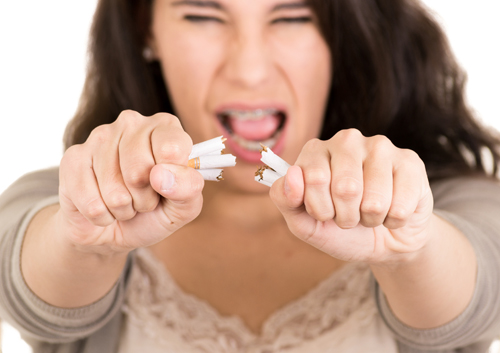
Cigarette smoke contains more than 6,000 chemicals, and at least 200 of those chemicals are known to be harmful to your health. When smoke is inhaled, moist oral tissues are saturated with excessive amounts of carbon monoxide, hydrogen cyanide, and a host of other known carcinogens. Most oral cancers originate in abnormal squamous cell activity, which are cells found on the lips, inside the mouth, and in the throat.

How Oral Cancer Begins

Cells exposed to consistently high levels of cigarette smoke may eventually suffer abnormal mutations within their DNA. Since deoxyribonucleic acid (DNA) is responsible for providing cells with instructions about growth, reproduction, and death, these instructions become distorted, which causes the cells to reproduce uncontrollably.

Essentially, that is what cancer is: rapid, unchecked growth of genetically mutated cells that encourages the development of malignant tumors. Unfortunately, the chemicals in cigarette smoke are strongly associated with oral cancer.

Signs of Oral Cancer

Early-stage oral cancer is often asymptomatic, which means symptoms appear only after the cancer intensifies and spreads. Possible signs of oral cancer include:

  • Ulcers inside the mouth or on the lips that do not heal
  • White or dark red patches inside the mouth
  • Lumps inside or around the mouth (a lump could appear on your neck)
  • Bleeding, numbness, and soreness in the mouth
  • Chronic halitosis
  • Loose teeth in the absence of tooth decay

Diagnosis and Treatment of Oral Cancer

Squamous cell oral cancer is the most common type diagnosed in smokers. Drs. Darrin and Greg Gremban and our staff often discover squamous cell carcinoma lesions during dental examinations or cancer screenings. Depending on the stage of the oral cancer, treatment may begin with a biopsy or an exfoliative cytology procedure that involves collecting cells from the oral cavity using a scraper.

According to the Oral Cancer Foundation, oral cancer patients may need surgery, radiation therapy, a combination of surgery and radiation therapy, or chemotherapy to eradicate oral cancer.

Smoking, Cancer, and Tooth Decay

Not only is smoking the number-one cause of cancer but it is also detrimental to the overall health of your teeth and gums. Yellow teeth, bad breath, dry mouth, and expedited tooth decay are all caused by smoking, not to mention the damage smoke does to the heart, lungs, and kidneys.

In other words, don’t smoke!

Thanksgiving in North America

November 24th, 2021

Thanksgiving marks the start to the holidays; a season filled with feasting, indulging, and spending time with family and friends are always special. Thanksgiving is a holiday meant for giving thanks, and while this may seem like such a natural celebration, the United States is only one of a handful of countries to officially celebrate with a holiday.

Unlike many holidays, Thanksgiving is a secular holiday, and it is celebrated on the fourth Thursday in November in the United States. In Canada, it is celebrated on the second Monday of October, which is, oddly enough, much closer to a time when harvests were likely gathered. In addition to the different dates, the origins of the celebration also share different roots.

Thanksgiving in the United States

Giving thanks for a bountiful harvest are not new, but the modern day holiday in the US can be traced to a celebration at Plymouth in Massachusetts in 1621. This feast of thanksgiving was inspired by a good harvest, and the tradition was simply continued on. At first, the colony at Plymouth didn't have enough food to feed everyone present, but the Native Americans helped by providing seeds and teaching them how to fish, and they soon began to be able to hold a feast worthy of the name. The tradition spread, and by the 1660s, most of New England was hosting a Thanksgiving feast in honor of the harvest.

Canadian Thanksgiving

An explorer of early Canada named Martin Frobisher is accredited for the first Canadian Thanksgiving. He survived the arduous journey from England through harsh weather conditions and rough terrain, and after his last voyage from Europe to present-day Nunavut, he held a formal ceremony to give thanks for his survival and good fortune. As time passed and more settlers arrived, a feast was added to what quickly became a yearly tradition. Another explorer, Samuel de Champlain, is linked to the first actual Thanksgiving celebration in honor of a successful harvest; settlers who arrived with him in New France celebrated the harvest with a bountiful feast.

A Modern Thanksgiving

Today, Thanksgiving is traditionally celebrated with the best of Americana. From feasts and football games to getting ready for the start of the Christmas shopping season, Thanksgiving means roasted turkey, pumpkin pie, and green bean casserole. No matter how you celebrate this momentous day, pause for a moment to give thanks for your friends, family, and all the bounties you’ve received. Happy Thanksgiving from Gremban & Gremban Dental!

Digital X-rays

November 17th, 2021

X-rays are a vital diagnostic tool for any dental professional. X-rays help your endodontist perform a root canal, your orthodontist check the position of a tooth’s root, your oral surgeon discover a fracture. X-rays reveal what we can’t see with the naked eye—and that’s why they are an especially important tool for Drs. Darrin and Greg Gremban as well.

Why Are X-rays Necessary?

There’s a lot going on below the surface. An X-ray can reveal such conditions as cavities between teeth or underneath fillings, abscesses and other infections in the bone, impacted wisdom teeth, and cysts and tumors. They can also show the size, shape, and density of the bone beneath the teeth, which is essential information for dental implant procedures or dentures.

How Do X-rays Work?

Traditional X-rays, or radiographs, make use of film just like traditional cameras. When you have an intraoral X-ray, for example, the film is sealed in a moisture- and light-proof packet, and placed inside the mouth to capture images of specific teeth and the bone around them.

The X-ray machine is aligned precisely with the film and an exposure is taken. The image at this point is latent, and won’t show on the film, because, just like photo film, traditional radiographs need to be chemically processed before they produce a visible image.

Digital technology, on the other hand, uses an electronic sensor instead of film. For an intraoral digital X-ray, a small sensor is positioned in the mouth just like a film. When the X-ray is taken, a digital image capture device produces an image which is formed by a matrix of pixels instead of a photo-like film exposure. This format allows the image to be sent directly to a computer for immediate display without requiring processing.

Even though these methods seem very similar, digital X-rays offer some significant advantages over traditional films. Let’s look at how they compare, more or less.

  • More Diagnostic Advantages

A traditional X-ray is a fixed image. It cannot be modified or enhanced. Here the digital X-ray offers a clear advantage in diagnosis.

Just as you can enlarge certain types of images on your computer without blurring or losing detail, a digital X-ray uses computer software to magnify images while keeping their details sharp. They can also be enhanced through brightness and contrast applications to make details stand out even more. Both of these benefits are extremely helpful for diagnosis, especially when looking for small cavities, problems in the roots and surrounding bone, or developing wisdom teeth.

There is even digital subtraction radiography software available that can be used to compare recent images to older ones, removing (“subtracting”) all the similarities in the two images to display only the changes in the two—even small changes—that have taken place over time.

  • Less Exposure to Radiation

Dental X-rays expose patients to very low levels of radiation, and modern technology means traditional X-rays expose patients to less radiation than ever before. Even so, digital X-rays have significant advantages. Radiation exposure can be reduced by an additional 10%, 20%, or more with a digital radiograph.

  • More Convenient for Sharing and Transmitting

If you need to share your X-rays with another dental specialist or physician, digital technology allows you to simply have them e-mailed to another office or multiple offices. You no longer need to worry about preserving physical copies, either.

  • Less Waste

Unlike traditional X-rays, digital X-rays don’t need to be processed, so you save time in the office. And while the processing time is not significant (usually several minutes), if you need to repeat some X-rays for a clearer picture, or require different images for several teeth, this time can add up.

Digital X-rays are also more eco-friendly.  The fact that they don’t need to be developed means that the chemicals used to process traditional films are no longer necessary—which also means that there is no need to dispose of chemical waste products afterward.

Our goal is to provide you with the safest, most efficient, and most effective dental treatment possible, and digital X-rays help us do that. If you have any questions about digital X-ray technology, contact our Eagle River office. We’re happy to explain the science—and the benefits—of high-tech radiography.

Back to top