Gremban & Gremban Dental

Improving your smile

office
phone
  • 865 North Railroad Street
    Eagle River, WI 54521
  • (715) 479-6100

Our Blog

Four Tips for Soothing a Toothache

August 12th, 2020
Whether it’s a dull and throbbing ache or a sharp pain, toothaches can come in many different forms. Chances are you’ve had the discomforting experience once or twice in your life. It’s the type of experience that nobody wants to have, because a toothache can be as annoying as fingernails scratching a chalkboard.

What’s a good way to describe a toothache? Let’s see … your mouth feels as if it’s being besieged by one of those Loony Tunes-style jackhammers. As fate would have it, toothaches always seem to occur over the weekend or after-office hours, leaving you to suffer and forcing you to cancel your reservation at that high-end restaurant you’ve been anticipating all week.

Not so fast!

While you’re probably going to want to skip the rib-eye steak, there are numerous tried-and-true home remedies you can use to ease the pain until you can make an appointment with our office. Here’s a look at four ways to soothe a toothache.

  1. Don’t underestimate the power of salt water. Rinsing your mouth with warm salt water will both soothe your toothache and disinfect your mouth. However, make sure the water is warm; cold water can further exacerbate a sensitive tooth. Follow up the saltwater rinse by swishing your mouth with hydrogen peroxide.
  2. Clove oil, eucalyptus oil, peppermint oil, and vanilla extract are proven to be comforting elixirs. Dip a cotton swab in one of these mixtures and apply it to your tooth and gums. These substances, which you may even have in your kitchen cupboards, are known to have pain-relieving qualities. For the best results, repeat the application throughout the day.
  3. Eating yogurt is good for toothaches and mouth pain. Yogurt is filled with healthy bacteria that combat pain. Afterward, place a cold compress on your jaw.
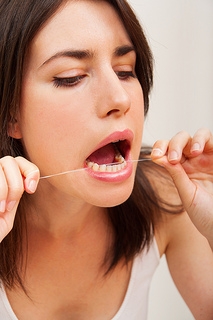
  4. Try flossing. Your toothache might be throbbing and severe, but there’s always a chance the pain is caused by a piece of food awkwardly lodged in your teeth.

We hope that helps! Give Gremban & Gremban Dental a call to learn more!

Does getting a dental implant hurt?

August 5th, 2020

Getting a dental implant is a surgical procedure and everyone’s pain tolerance level is different. Therefore, what one person may perceive as pain is only a slight discomfort for another person. The general consensus about pain and dental implants is that the majority of people feel discomfort, not pain.

A dental implant is a complex procedure. Let’s take a look at what may cause discomfort:

  • Some people may find that having the IV put in is uncomfortable, especially if the healthcare worker has to try more than once. If you have a fear of needles or if you have anxiety about the procedure, we can prescribe a sedative, which you take before you arrive.
  • Of course, during the dental implant surgery, you will be asleep. Therefore, you will not feel any pain or discomfort at all.
  • When you awake from the surgery, your mouth should still be numb. In many cases, we can give you a “block” – it is basically a 24-hour pain medication, so you will not feel any pain or discomfort at all.
  • We will also provide you with a prescription for a strong pain killer, and you will most likely sleep while you are taking them. If you are still in pain, do not take more than is prescribed without calling us first. You will need someone to stay with you for 24 hours after the surgery, and they will be instructed on how to give you any prescription medication. The anesthesia tends to make people a bit loopy and forgetful the first 24 hours.
  • After the first 24 hours you may feel some discomfort. The most important thing you can do is take your pain medication regularly, whether you are taking the prescription medication or an over-the-counter pain reliever such as Tylenol or Advil.
  • You should not need pain medication for more than the first few days.

Most people do say there mouth is sore and they have to be careful what they eat, so it’s best to stick to soft foods. If you have any additional questions, please contact our Eagle River office and speak with Drs. Darrin and Greg Gremban.

Ask Us about These Dental Treatments

July 29th, 2020

There are a few dental treatments that Drs. Darrin and Greg Gremban and our team recommend for all patients to get if they wish to protect their oral health. Sometimes it’s hard for patients to decide which treatment plan would be best for their teeth. Learn about these three must-have treatments and how they can help protect your teeth in various ways.

Professional Cleanings

First, get a professional dental cleaning every six months. Regular cleanings can protect you from potential gum disease because they enable us to catch it early.

Cleanings also will get rid of plaque and tartar that have collected on your teeth over time. Oral health has been linked to your body’s overall health. We recommend scheduling your appointments in advance: Feel free to contact our practice’s Eagle River location if you forget when you scheduled your next visit. Our staff will be happy to assist you.

Periodontal Exams

We also recommend that all our patients at Gremban & Gremban Dental receive a complete periodontal exam each year. You can ask about this during your regular, scheduled cleanings.

It’s a quick and painless procedure in which our hygienist probes each tooth to make sure the bone and soft tissue are healthy. If there’s a sign of infection, we will be able to treat it effectively before painful symptoms kick in.

Many adult patients are unaware that they have periodontal disease, and they may suffer the loss of a tooth if it goes untreated. Make sure you schedule a periodontal exam each year and save yourself a lot of time and pain.

Sealants

We also recommend dental sealants, particularly to protect your molars. Many people assume this treatment is just for kids to prevent cavities, but it can be used for adults too!

Sealants provide a protective barrier on your teeth that can help block against the buildup of plaque in those hard-to-reach areas in the back of your mouth. If you received sealants as a child, chances are they’ve worn off over time.

So if you want to save dental costs over the long haul, we recommend getting sealants again for cavity protection.

Drs. Darrin and Greg Gremban and our team hope you take our advice when it comes to your oral hygiene and schedule regular appointments for your dental cleanings. We look forward to seeing you at your next appointment!

Dental X-Rays: Are They Safe?

July 22nd, 2020

X-rays have been a function of dental healthcare for a long time. That in and of itself should be good news, because it means we've had plenty of time to improve them. While there is always some risk in exposure to radiation, dental X-ray exposure has decreased significantly due to all the advances in technology. So there’s risk, but X-rays are quite safe.

Think of X-rays as you would about a car. Automobiles these days have all kinds of technology to make them as safe as possible. There's still a chance that you’ll suffer an accident. Would you stop using a car because of that risk? When it comes to dental X-rays, Drs. Darrin and Greg Gremban and our team believe the positives clearly outweigh the negatives.

X-rays can be done digitally or with film. For film, X-rays require different exposures at different speeds to produce the image. Digital X-rays have software that automatically adjusts the exposure and produces the X-ray in a digital file. Since they substantially reduce your exposure to radiation, digital X-rays are the current standard in dental offices.

In addition to digital X-rays, lead aprons are an essential piece of X-ray safety. They help protect internal organs from X-rays by acting as a shield. They usually come with a thyroid collar as well, since that is one of the most vulnerable areas to X-rays in the body. Lead aprons can absorb up to 95% of any scatter rays that result from an X-ray. Not bad, right?

Although dental X-rays involve some radiation exposure (not all of it can be eliminated), so does everyday life. Getting too much sun, for example, can be dangerous. The truth is, we accumulate radiation in our bodies over a lifetime, so it’s worthwhile to be aware and avoid as much unnecessary exposure as possible. When it comes to your dental health, though, getting an X-ray — especially when your doctor says you need it — offers more benefits than risks.

Ask us about the type of dental X-rays we use during your next visit to our Eagle River office!

Back to top