Gremban & Gremban Dental

Improving your smile

office
phone
  • 865 North Railroad Street
    Eagle River, WI 54521
  • (715) 479-6100

Our Blog

What should I do if my child has a toothache?

October 17th, 2025

Toothaches in children can be tricky ordeals that cause distress for both the child and the parent. You may feel helpless and frustrated because you cannot pinpoint the location of the pain. It is so hard to see your little one experience discomfort and feel like there is nothing you can do about it. But there are ways you can help. Try these tips the next time your child has a toothache.

Zero in on the Painful Area

The first thing you need to do is find out where the pain is coming from. If your child is old enough, ask him or her to point to the painful area. In younger children, look for swelling and redness on the gums and cheek, dental caries (discolorations on the tooth), or broken teeth. Try to get as close to the location of the pain as possible so you can determine an effective course of action to relieve it.

Try to Find the Cause

Not all toothaches are actually toothaches. A child can bite his or her tongue or cheek, have sore gums, or develop ulcers in the mouth. Teeth that are coming in can also be quite painful. If a tooth is discolored, broken, loose, or has spots that are either darker or lighter than the rest of the tooth, those could be causes of pain.

Five-Step Approach to Dental Pain Relief

  1. Floss. Help your child floss to remove any food particles that may be wedged between the teeth and could be causing pain.
  2. Rinse with warm salt water. Use a warm salt-water solution and have your child rinse well by swishing or holding the salt water over the painful area.
  3. Use a cold compress. This can relieve pain and swelling. If there is no swelling, you can try it anyway to subdue the pain. Try it on for about 15 minutes, then off for 20.
  4. Give the child ibuprofen or acetaminophen. Use the appropriate dosage for your child’s age and administer it regularly as directed.
  5. See Drs. Darrin and Greg Gremban. If you determine that the tooth or gum is damaged, or if the pain simply cannot be relieved, call our Eagle River office.

If your child is experiencing throbbing pain, fatigue, or fever, you should call your pediatrician as soon as possible. If your child is experiencing mouth pain accompanied by trouble breathing or swallowing, it can indicate a more serious situation and you should take your son or daughter to the emergency room.

Most mouth pain in children can be remedied with the simple steps here. The important thing is that you remain calm, no matter what. You child is taking cues from you and if you panic, he or she will panic.
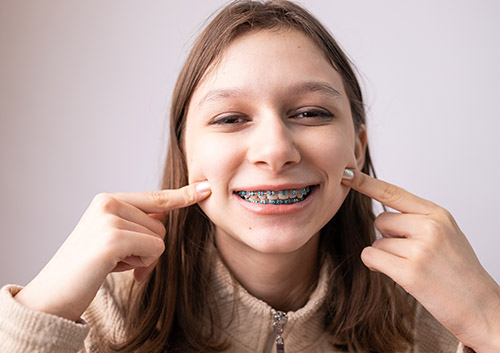

October Is Orthodontic Health Month!

October 16th, 2025

October’s here! A month when we celebrate the beauty of fall, the taste of pumpkin spice, the fun of Halloween in Eagle River, and the healthy smiles which orthodontic treatment makes possible!

Because October is Orthodontic Health Month, and it’s a great time to talk about how your orthodontist helps you create not just a more beautiful smile, but a healthier one. 

Straight, evenly spaced teeth are the visible benefit of treatment, but there are many health benefits which might not be quite as noticeable. Orthodontic treatment can:

  • Help You Prevent Cavities and Gum Disease 

When teeth are crowded or crooked, it’s hard for your toothbrush and floss to reach all of the plaque which builds up on and between your teeth. The bacteria in plaque create acids which start to dissolve tooth enamel. And a very small hole in the enamel surface can grow until it becomes a cavity. 

Plaque and bacteria also irritate the gums. When you can’t remove plaque completely, your gums are at risk for gingivitis. This early stage of gum disease causes redness, tenderness, swelling, and bleeding. Left untreated, gingivitis can develop into more serious gum disease. 

And, over time, plaque hardens and becomes tartar, which needs to be removed professionally at Gremban & Gremban Dental.

When your teeth are straight and evenly spaced, brushing and flossing are both easier and more effective, helping you keep your teeth and gums healthy and plaque-free.

  • Create a Better Bite

For a healthy bite, your teeth and jaws need to align correctly. The top teeth should slightly overlap the lower teeth, and the ridges of your upper molars should fit smoothly with the grooves of your lower molars. 

Malocclusions, or bad bites, can come in many forms, including overbites, underbites, open bites, cross bites, and overjets. A bad bite is bad for your dental health. Malocclusions can cause tooth grinding, worn enamel, and even cracked teeth. 

And bad bites don’t just affect your teeth. When your bite doesn’t align properly, you might suffer from problems such as headaches, jaw pain, indigestion, and sleep apnea. 

Orthodontic treatment creates a healthy, symmetrical, and pain-free bite.

  • Improve Your Self-Confidence

We can’t forget the invisible health benefits of orthodontic treatment! Your smile is a gift which you share with the world. But if you’re hesitating to smile because of self-consciousness about your teeth or bite, orthodontic treatment can make a world of difference.

Your orthodontist can help you achieve straighter teeth, a bite which fits together properly, and, when malocclusions affect jaw symmetry, a more balanced facial profile. If you’re concerned about the appearance of your smile, talk to Drs. Darrin and Greg Gremban about an orthodontic consultation. Today’s technology can even let you see what your future smile will look like!

Modern orthodontic treatment is more effective and takes less time to complete than ever before. And orthodontics offers patients of all ages more benefits than ever before: 

  • New types of braces are less noticeable and more comfortable than older styles. Smaller brackets, brackets which blend with tooth enamel, clear aligners, and lingual braces give you a variety of options to customize your treatment.
  • Early orthodontic treatment can guide jaw growth in younger children. 
  • Appliances can help with jaw alignment in older children, or, for more serious malocclusions, an orthodontist can coordinate treatment with an oral surgeon.
  • Treatment isn’t limited to the teen years. Adults make up a large and growing number of orthodontic patients. 

If you’ve been considering orthodontic treatment, October—or any month!—is a great time to schedule a visit with an orthodontist. An orthodontic evaluation will let you know just what your orthodontist can do to help you create a beautiful and healthy smile.

Anemia and Your Oral Health

September 24th, 2025

One of the most common clues that you might have anemia is found in your smile. If you’ve noticed that your gums are suddenly paler than they used to be, it could be a sign that you’re anemic. What does this mean for your general health—and your oral health?

There are several types of anemia, which have can be caused by different medical conditions and which can cause different symptoms. The most common form of anemia, and one of the most easily treated, is iron-deficiency anemia.

Iron is essential to our health. Why? It’s all about the red blood cells. First, some biology.

Every cell in your body needs energy to live and to function. Cells get this energy from the foods we eat, which are broken down into a simple sugar called glucose. Glucose molecules are transported by our blood cells to reach all parts of the body. But that’s only the first step.

Energy is released into the cells when the chemical bonds holding glucose molecules together are broken. And this requires oxygen. Once inside our cells, glucose and oxygen react, breaking the chemical bonds of the glucose molecules, reconfiguring their atoms to create carbon dioxide and water byproducts—and releasing energy into a form your cells can use.

So, how do we move this oxygen from our lungs to our cells to start the process? That would be our red blood cells again. But this process can’t happen without adequate iron. More biology!

Red blood cells contain a protein called hemoglobin, and hemoglobin contains iron. In fact, well over half of the iron in our body is found in our red bloods cells. And here’s the key to iron’s importance: iron attracts oxygen molecules.

Hemoglobin picks up oxygen in our lungs and delivers it throughout the body, where it becomes glucose’s essential partner in fueling our cells. Without enough iron, your body won’t be able to create the red blood cells it needs so that all of your cells, tissues, and organs can get the oxygen they need to function efficiently.

When might you suspect that you’re anemic? Your gums, the lining of the mouth, the inside of your lower eyelids, and your skin can take on a paler hue—the classic sign of anemia. But other symptoms which you might not necessarily associate with anemia are also common, including:

  • Fatigue
  • Heart palpitations
  • Cold hands and feet
  • Dizziness
  • Irritability
  • Difficulty Concentrating
  • Pica (the desire to eat non-food items)

And because anemia affects the whole body, your oral health isn’t immune. It’s not just a matter of pale gums. Iron deficiencies can cause:

  • Sores and ulcers in the mouth
  • Cracks on the sides of the mouth
  • Pain, redness, and/or swelling of the tongue
  • Loss of papillae (those little bumps on your tongue which hold your taste buds)
  • Tooth damage caused by pica
  • Dry mouth, which increases your risk for cavities, gum disease, oral infections, and bad breath

Iron-deficiency anemia can have several causes, among them insufficient iron in the diet, medical conditions which cause bleeding (such as ulcers), heavy menstruation, pregnancy, or growth spurts in children and teenagers. Treatment will depend on the cause of your anemia. It might be as simple as a change in diet or an iron supplement, or it might require further treatment options. Do consult with Drs. Darrin and Greg Gremban before taking iron supplements, as too much iron causes iron toxicity, which can be very dangerous.

If Drs. Darrin and Greg Gremban and our team suggest that you might be anemic, or if you notice changes you think might be caused by anemia, see your physician for a simple blood test. Besides iron-deficiency anemia, there are other forms of anemia and other diseases which can mimic these symptoms, so it’s important to get a doctor’s diagnosis. If you have been diagnosed with anemia, let our Eagle River dental team know.

One last “if”: If you do have iron-deficiency anemia, don’t delay treatment. The sooner your red bloods cells are back at their peak, the sooner you—and your gums—will be back in the pink!

Dental Fear in Children: Brought on by parents?

September 17th, 2025

A study conducted in Washington State in 2004 and another conducted in Madrid, Spain in 2012 both reported findings that support a direct relationship between parents’ dental fear and their child’s fear of the dentist.

The Washington study examined dental fear among 421 children ages 0.8 to 12.8 years old. They were patients at 21 different private pediatric dental practices in western Washington state. The Spanish study observed 183 children between the ages of seven and 12 as well as their parents.

The Washington study used responses from both parents and the Dental Sub-scale of the Child Fear Survey Schedule. The survey consisted of 15 questions, which invited answers based on the child’s level of fear. The scale was one to five: one meant the child wasn’t afraid at all, and five indicated he or she was terrified. The maximum possible points (based on the greatest fear) was 75.

Spanish researchers found a direct connection between parental dental fear levels and those among their kids. The most important new discovery from the Madrid study was that the greater the fear a father had of going to the dentist, the higher the level of fear among the other family members.

Parents, but especially fathers, who feared dental procedures appeared to pass those fears along to every member of the family. Parents can still have some control over fear levels in their children. It is best not to express your own concerns in front of kids; instead, explain why going to the dentist is important.

Drs. Darrin and Greg Gremban and our team work hard to make your child’s visit at our Eagle River office as comfortable as possible. We understand some patients may be more fearful than others, and will do our best to help ease your child’s anxiety.

Back to top