
Gremban & Gremban Dental

Improving your smile

office
phone
  • 865 North Railroad Street
    Eagle River, WI 54521
  • (715) 479-6100

Our Blog

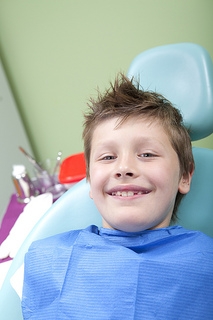
How do I handle my child’s dental emergency?

August 13th, 2025

With children undergoing developmental dental changes and engaging in rough-and-tumble activities, dental emergencies can sometimes arise. If your child knocks out a tooth or experiences any type of oral discomfort, call Gremban & Gremban Dental right away so we can provide you with a quick assessment and pain-free treatment.

Before an emergency occurs, it’s a good idea to stay informed about the problems your child may encounter. Here are a few things you should keep in mind about teething pain, loose baby teeth, and other common dental issues.

Teething Pain

Typically occurring in babies that are between four months and two and a half years old, teething may cause excessive drooling, tender gums, and some irritability. Giving your baby a cold teething ring or gently rubbing her gums with wet gauze or your finger may also make her feel better.

Loose Baby Tooth

It is normal for a child’s first set of teeth to become loose and fall out. On the other hand, if your child’s baby tooth is knocked loose, schedule an appointment with our office so we can assess whether any damage has been done.

Issues with Permanent Teeth

Sometimes a child’s permanent teeth will grow in before the baby teeth have fallen out. Even if this condition isn’t causing any discomfort, you should schedule an appointment with our office so we can determine whether your child’s permanent teeth are growing in correctly.

Bleeding Gums

Bleeding gums can result from a number of factors, including periodontal disease, rough brushing, or an injury to the gum tissue. If your child’s gums are bleeding heavily, call our office right away so we can address the situation. If you have time before your appointment, wash your child’s mouth with salted water and gently put pressure on the affected area.

Regardless of the type of dental issue your child has, you can always consult Drs. Darrin and Greg Gremban for further guidance. We make sure our emergency services are available 24 hours a day and seven days a week, so you have ready access to convenient and professional dental care that will have your child feeling better in no time.

What to Do When the Tooth Fairy Isn’t on Schedule

August 6th, 2025

August 22 is National Tooth Fairy Day! If the Tooth Fairy is a treasured part of your child’s life, you’re just in time to celebrate! But what to do when the Tooth Fairy doesn’t arrive on schedule—when baby teeth stay longer than expected or are lost too soon? 

A baby’s 20 baby teeth tend to come in within a fairly predictable time frame. The bottom central incisors in the very front of your baby’s mouth typically make their appearance first, when your baby is around six to ten months old. Over the next few years, the remaining incisors, canines, and first molars arrive. Last on the scene are the second molars, which usually show up between the ages of 23-33 months. 

Just as baby teeth follow a pattern coming in, they tend to follow the same pattern falling out. The front teeth begin to wiggle and loosen around age six or seven, while the last of the baby teeth, the canines and second molars, are often lost between the ages of ten and 12. 

Baby teeth fall out as the adult teeth below them push up as they erupt. The top of the new tooth puts pressure on the root of the baby tooth, gradually dissolving it. As the root grows smaller and can’t anchor the tooth, the tooth begins to wiggle and eventually becomes loose enough to fall out. This leaves the adult tooth perfectly placed to grow into its proper position.

Sometimes, though, teeth linger far past their fall-out date. Sometimes, because of decay or trauma, they are lost much too early. In either case, Drs. Darrin and Greg Gremban can provide treatment to protect little smiles now and to ensure that there’s space for the permanent teeth to erupt and align correctly.

Teeth Which Overstay Their Welcome

If that baby tooth never gets wiggly, the team at Gremban & Gremban Dental can help! When baby teeth stubbornly hang on, adult teeth can erupt behind them, creating a double row of teeth commonly known as “shark teeth.” These permanent teeth can become crowded or misaligned as they try to fit in any space available. Or a baby tooth can block an adult tooth from erupting at all. When that baby tooth just isn’t budging, an extraction will create space for the permanent tooth to erupt.

Extracting a baby tooth is generally a straightforward procedure because primary teeth have very small roots. Your child’s dental team at Gremban & Gremban Dental are experts in helping you prepare your child for the procedure in a gentle, reassuring, and age-appropriate way. 

Often, a local anesthetic is all that’s necessary for a simple extraction, but if you feel sedation would better fit your child’s needs, discuss sedation options with your dentist. After the extraction, you’ll be given clear information on how to deal with pain and swelling, which foods and drinks are best while the extraction site heals, and how to protect the area.

Teeth Which Exit Too Early

In the case of decay or trauma, Drs. Darrin and Greg Gremban will do everything possible to save the tooth. When decay is so extensive that there’s not enough structure left to hold a filling or crown, or when there’s an infection in or around the tooth, or when an accident or injury has caused serious damage, extraction might be the healthiest option. Depending on your child’s age, further treatment might be needed afterward to protect future smiles. 

Besides their roles in eating and speaking, baby teeth save space for permanent teeth. Whenever a child loses a primary tooth too soon, the family dentist will be on the lookout for potential future orthodontic problems. If remaining baby teeth shift, taking up part of the empty space left behind by the lost tooth, the adult teeth below won’t have the space they need to erupt properly. Permanent teeth might come in at an awkward angle or in the wrong place. 

In this case, Drs. Darrin and Greg Gremban might recommend a space maintainer. Space maintainers are small, custom-designed appliances which prevent the remaining baby teeth from shifting position while holding space open for the permanent tooth to arrive right on schedule and right where it belongs. 

It’s comforting to have charts which let us know when little teeth will typically come in and when they will typically fall out. But unexpected events might mean teeth overstay their welcome or depart too soon. When the Tooth Fairy can’t keep to her schedule, schedule an appointment at Gremban & Gremban Dental in Eagle River as soon as possible to make sure your child is on track for a future of healthy smiles.

The Stages of Gum Disease

July 30th, 2025

Taking care of your gums is one of the best ways to protect your smile. But sometimes, we treat our gums like an afterthought when it comes to dental care. It might surprise you to learn just how common gum disease is—and how damaging it can be for your oral health.

Surprising Fact #1:

About half of all adults have suffered or are suffering from some form of gum disease. And about half of all children do, too. As we age, the percentages jump—in fact, some studies estimate that eventually 70% of older adults will be affected by gum disease.

Surprising Fact #2:

The major cause of tooth loss in adults isn’t tooth decay or accidents or aging—it’s gum disease.

Surprising Fact #3:

Gum disease is progressive. The gingivitis that begins with a bit of redness or some minor bleeding when you brush might seem like a temporary annoyance. But when ignored, this early form of gum disease can lead to periodontitis, a serious gum condition which causes receding gums, loose teeth, bone and tissue damage, infections, and tooth loss.

Gingivitis

Gum disease begins quietly and invisibly, and it usually starts with plaque. Plaque along the gum line irritates our gum tissue. The body’s immune system responds and triggers inflammation. Gum tissue becomes swollen and red. The gums might feel tender, or bleed easily when you brush or floss.

If you’ve experienced any of these symptoms, it’s time to call our Eagle River office. Drs. Darrin and Greg Gremban might recommend better brushing and flossing habits, a professional cleaning, and/or an anti-plaque treatment. At this stage, with proper care, gingivitis is reversible.

But left untreated, gingivitis can progress over time until it becomes periodontitis. Periodontitis affects not only gum tissue, but the bone and connective tissue which surround our teeth, supporting them and holding them firmly in place.

Mild Periodontitis

As plaque and tartar continue to irritate gum tissue above and below the gum line, inflammation increases, and the gums begin to pull away from the teeth. This is a problem, because the gums normally surround the tooth roots snugly, protecting them from plaque, bacteria, and other toxins.

When gum tissue pulls away, pockets are created between gums and teeth. These pockets become home to more bacteria, causing more irritation, inflammation, and infection. During this phase, the connective and bone tissue around the tooth’s roots might start to break down.

Moderate Periodontitis

As the disease progresses, pockets become deeper. The structures that hold the teeth in place continue to break down, and the teeth start to loosen. As the gums recede, tooth roots become more vulnerable to decay.

Advanced Periodontitis

When periodontitis has reached the advanced stage, there is significant loss of tissue and bone around the teeth. Teeth become looser and foul breath, pus, and pain when biting or chewing are common. Without prompt treatment, there’s a high risk of tooth loss.

Unlike gingivitis, periodontitis isn’t reversible, and requires professional care. Advanced treatments can do a lot to restore gum health:

  • Topical, time-release, or oral medications treat infection.
  • Scaling and root planing, which are non-surgical deep cleaning procedures, remove plaque and tartar above and below the gum line, and smooth tooth roots to remove bacteria and help the gum tissue reattach to the teeth.
  • Flap surgery treats more advanced gum infection, reducing pocket depth and re-securing the gums snugly around the teeth.
  • Bone grafts, gum grafts, and other regenerative procedures are available that help restore and repair tissue damaged by gum disease.

That’s good news, and there’s even better news: Because gum disease is typically triggered by plaque, it’s very preventable.

  • Brush carefully at least twice each day for at least two minutes. Don’t forget to brush along the gum line!
  • Use floss at least once each day or as directed by Drs. Darrin and Greg Gremban. If you have trouble flossing, ask us for the flossing tools and techniques that will work best for you.
  • See your dentist regularly to catch and treat early gum disease while it is still reversible.

While gum health is essential for dental health, healthy gums might mean more than just healthy teeth. Scientists are studying the potential links between gum disease and its effects on conditions such as heart disease, diabetes, and arthritis. Gum health should never be an afterthought. Taking care of your gums is one of the best things you can do to ensure a lifetime of healthy smiles.

I have halitosis. What can I do?

July 23rd, 2025

Halitosis is the fancy, scientific word for “bad breath.” Drs. Darrin and Greg Gremban and our team know there are several reasons why you may have halitosis; let’s look at a few:

  • Gum disease (also known as periodontal disease) – There are five main types of gum disease, and each one can range from mild to severe. For example the most common one is gingivitis; it is caused by bacteria in the plaque that has been allowed to build up, usually as a result of poor oral hygiene. A more serious and uncommon type of gum disease is called necrotizing periodontal disease. It is most common in people who have a suppressed immune system.
  • Smoking
  • Dry Mouth – This can be caused by something as simple as a medication you take.
  • Food – Of course, if you eat something that is potent like garlic, it is going to give you bad breath.
  • Diseases of the Body – Some diseases such as sinus infections and diabetes, among a few other types of infections, can also cause you to have halitosis.

How to Get Rid of Halitosis

The most obvious answer to how to get rid of halitosis is to practice good oral hygiene, although, depending on the cause of halitosis it may not be that simple. If you have an infection that is causing the halitosis then you may need an antibiotic to clear up the infection and then the bad breath will go away. Here are more tips:

  • Brush your teeth after every meal and before bed.
  • Floss your teeth. The more plaque you get out of your teeth, the better chance you have of not getting cavities or bad breath.
  • Address any medical conditions that are not related to your teeth that can be causing the halitosis.
  • Ask Drs. Darrin and Greg Gremban for a prescription mouthwash that kills bacteria.

Halitosis (bad breath) can be an embarrassing condition to live with, but there are plenty of ways to get rid of it permanently. Start by talking to a member of our team at our Eagle River office.

Back to top