Gremban & Gremban Dental

Improving your smile

office
phone
  • 865 North Railroad Street
    Eagle River, WI 54521
  • (715) 479-6100

Our Blog

Treating Gum Disease with Antibiotics

March 19th, 2025

Why does gum disease develop? Our mouths are home to bacteria, which form a film called plaque. Plaque sticks to the surfaces of our teeth, at the gumline, and can even grow below the gumline. And this bacterial growth leads to inflammation and gum disease.

When the disease progresses, the gums gradually pull away from the teeth leaving pockets which can be home to infection. Toxins can attack the bone structures and connective tissue, which support our teeth. Left untreated, periodontal disease can lead to serious infection and even tooth loss.

Because we are dealing with bacteria, it makes sense that antibiotics are one way to combat gum disease. Depending on the condition of your gums, we might suggest one of the following treatments:

  • Mouthwashes—there are mouthwashes available with a prescription that are stronger than over-the-counter antibiotic formulas, and can be used after brushing and flossing.
  • Topical Ointments—These ointments or gels are applied directly to the gums, most often used for mild forms of the disease.
  • Time-release Treatments—If there is severe inflammation in a pocket, we might place a biodegradable powder, chip, or gel containing antibiotics directly in the affected area. These minute methods release antibiotics over a period of time as they dissolve.
  • Pills and Capsules—For more serious periodontal disease, you could be prescribed an oral antibiotic. Take in pill or capsule form as recommended, and always finish the entire prescription.

Talk to Drs. Darrin and Greg Gremban at our Eagle River office before beginning a course of antibiotics. It’s important to know if you have any allergies to medications, what to look for if you might have an allergy you didn’t know about, if you are pregnant or breast-feeding, or if you have any health concerns that would prohibit antibiotic use. Talk to us about possible side effects and how to use the medication most successfully. With proper treatment, we can treat gum disease as quickly and effectively as possible, and provide advice on maintaining a periodontal routine that will keep your gums and teeth healthy for years to come.


St. Patrick's Day

March 12th, 2025

On March 17, everyone has a little Irish in them. St. Patrick’s Day is a joyous celebration of Irish heritage. The holiday originated as a commemoration of Saint Patrick, who brought Christianity to Ireland. The saint arrived in Ireland in 432 and earned the reputation of a champion of Irish Christianity. March 17th, the day of St. Patrick’s death, has been commemorated by the Irish for over 1,000 years. St. Patrick’s Day is still observed as a religious feast day by several Christian denominations, but it is better known in the public imagination as a rich celebration of Irish culture.

St. Patrick’s Day has been an official public holiday in Ireland since 1903. Each year, the Irish celebrate with a several-day festival that includes theater performances, music, fireworks, and festive parades. The celebration is also a public holiday in Northern Ireland, Montserrat, and Newfoundland and Labrador. In other parts of the world with heavy Irish populations, it is an unofficial celebration of Irish heritage. Parts of Great Britain, Canada, Argentina, South Korea, Switzerland, New Zealand, the United States, and Australia commemorate the holiday each year. Typical celebrations in these countries include drinking green beer, wearing green, eating traditional Irish foods, parades, and shamrock decorations.

Many people, Irish and non-Irish alike, take part in the “wearing of the green” on St. Patrick’s Day. In fact, the color originally associated with Saint Patrick was blue. His use of shamrocks to explain the Holy Trinity to the Irish made the green clover emblematic of the holiday, leading to the traditional green attire worn by thousands on St. Patrick’s Day. Other little-known facts about St. Patrick’s Day include the following:

  • Each year, the United States and Ireland face off in a rugby competition called the “St. Patrick’s Day Test.”
  • Montreal celebrates the holiday with an annual parade, which has been held each year since 1824. The Montreal city flag even features a shamrock in its corner, as a nod to its Irish heritage.
  • The Guinness World Records named St. Patrick’s Day the “Friendliest Day of the Year.”
  • Along with Valentine’s Day, St. Patrick’s Day is one of the most widely celebrated saint’s day in the world.

No matter your cultural heritage, St. Patrick’s Day is a great time to let loose and celebrate your inner Irish-ness! Don your greenest attire and exclaim “Erin go Bragh!” (Ireland forever!) to everyone you meet. From Drs. Darrin and Greg Gremban - have a great St. Paddy’s day!

Good Nutrition Leads to Healthy Mouths

March 5th, 2025

At Gremban & Gremban Dental, we know the most common oral health diseases are tooth decay and periodontal disease (or gum disease), and both are among the easiest to prevent. One of the most common ways we recommend to boost your oral health is by improving your diet, because you (and your mouth) truly are what you eat. A healthy diet can lead to a healthy mouth and body, while an unhealthy diet can lead to the exact opposite.

The Role Nutrition Plays

While diet is not the only factor that leads to periodontal disease, studies suggest the disease may be more severe among patients whose diets lack essential nutrients. Poor diets will generally lead to a weaker immune system, leaving your body susceptible to all kinds of ailments, including periodontal disease.

A Well-Balanced Approach

There is no “magic” diet that we can recommend to improve your oral health, but the most important thing is to seek a well-balanced approach in your eating. While fad diets that emphasize one food group over another may help you lose weight in the short-term, they probably will not provide all the nutrients your body needs in the long run.

Meals should include a balance of lean meats or other healthy protein sources, colorful fruits and vegetables, whole grains, low-fat dairy, and healthy fats. Foods containing substantial amounts of sugar and salt should be consumed in moderation.

Soda and Sugar: A Dangerous Duo

Millions of gallons of soda are consumed every day in America, but sipping a cold soft drink can be very harmful to your teeth. Many of these beverages wear down the enamel that protects the teeth, which weakens and even destroys them over time. The American Beverage Association estimates that soft drinks account for almost 30 percent of all drink consumption in the U.S., averaging an annual total of about 50 gallons per person (up from only 20 gallons in the 1970s). For healthy teeth and a healthy body overall, try to limit your soda intake.

Sugar is another ubiquitous treat in our daily lives. When we eat sugar, naturally occurring bacteria in our mouths convert it to acids that attack tooth enamel. Consuming too much sugar can swiftly lead to tooth decay, cavities, and gum diseases like gingivitis. Most people do not even realize how much sugar they consume each day. It’s important to limit your daily sugar intake by reading the labels of all the food you eat, and sticking with natural food sources that are low in sugar, especially ones that minimize added sugar, such as fruits and vegetables.

If you have questions about your diet and how it may be affecting your oral health, talk to Drs. Darrin and Greg Gremban about it. See you soon!

Electric or Manual Toothbrush: Why It Does (and Doesn't) Matter

February 26th, 2025

You live in the golden age of toothbrushes. Until a few decades people used twigs or brushes made from animal hair to clean their teeth: not very soft and none too effective.

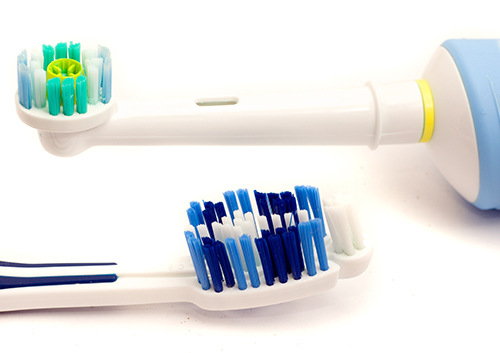
Now, you have a choice of manual brushes with soft, medium, or hard bristles. Or you might choose to go with an electric toothbrush instead.

Have you ever wondered whether manual or electric brushes provide better cleaning? Actually, they both do the job. The key is to brush and floss every day, regardless of the kind of brush you prefer.

At our Eagle River office, we like to say the best brush is the one you'll use. So if you prefer manual, go for it. If you prefer electric, turn it on.

Both types have their advantages but both types will get the job done as far as removing plaque.

Electric Toothbrushes

  • Provide power rotation that helps loosen plaque
  • Are great for people with limited dexterity due to arthritis or other problems
  • Are popular with kids who think the electric brushes are more fun to use
  • Can come with variable speeds to help reduce pressure on sensitive teeth and gums

Manual Toothbrushes

  • Can help brushers feel they have more control over the brushing process
  • Allow brushers to respond to twinges and reduce the pressure applied to sensitive teeth and gums
  • Are more convenient for packing when traveling
  • Manual brushes are cheaper and easier to replace than the electric versions.

In many ways, the golden age is just beginning. There are already phone apps available to remind you to brush and floss. New apps can play two minutes worth of music while you brush, help you compare the brightness of your smile or help explain dental procedures. Maybe someday we’ll even have programs that examine your teeth after brushing and identify spots you might have missed.

Back to top