Gremban & Gremban Dental

Improving your smile

office
phone
  • 865 North Railroad Street
    Eagle River, WI 54521
  • (715) 479-6100

Our Blog

What to Do for Your Loose Tooth

May 20th, 2026

One of the first exciting childhood experiences we outgrow is the excitement of discovering a loose tooth. Sadly, there’s no adult Tooth Fairy waiting to exchange a gift for a lost tooth, and, even worse, there’s no backup tooth all set to replace it.

If one of your permanent teeth is feeling a little less than permanent, don’t ignore the problem! Here are four things to do right away when you discover a loose tooth:

Eat Soft Foods

While you’ll probably automatically take caramels off the menu and ditch your chewing gum, crunchy foods such as nuts, chips, even apples can be a problem for a compromised tooth. Stick with soft foods and try to eat on the opposite side of your loose tooth.

Keep the Area Clean

The typical bacteria and food particles in your mouth won’t thoughtfully leave the area around your wiggly tooth untouched. But your normal brushing and flossing might be a little too much for a loose tooth. Gently rinsing with warm water should do the trick until you can see us.

Leave It Alone

Sometimes the hardest thing to do is to do nothing. But when it comes to a loose tooth, please choose this course of (in)action. You might recall having a loose tooth as a child, and how you’d automatically wiggle it with your tongue or your fingers. But you’ll also remember what happened at the end of all that wiggling—your baby tooth fell out.

Teeth are held in place by ligaments attached to the alveolar bone in the jaw. When those ligaments or bone are damaged because of injury or infection, your tooth feels loose. Wiggling your tooth back and forth can cause further detachment and expose you to more bacteria. So even though it might be tempting, leave your tooth alone until you can see us.

Call Your Dentist Immediately

The most important tip of all! Call Drs. Darrin and Greg Gremban at once if you notice a loose tooth. It’s important to discover not only the best treatment, but the reason for your loose tooth as well. A loose tooth can be caused by several different conditions, and none of them should be ignored.

  • A blow to your mouth

If your tooth, ligaments, or bone have suffered trauma, your dentist might be able to stabilize your loose tooth with a splint so that ligament and tissue can heal.

  • Gum disease

Periodontitis (severe gum disease) is a chronic condition. Pockets form between your gums and teeth that become home to bacteria and infection. Over time, periodontitis can destroy gum, ligament, and bone tissue. Left untreated, it leads to loose teeth and even tooth loss. Gum disease is reversable when caught early enough, and even in later stages can respond well to a variety of treatments.

  • Pregnancy

Hormonal changes during pregnancy can cause the ligaments and bones around your teeth to loosen, and loose teeth are the result. While this situation is usually temporary, taking care of your teeth and gums is essential during pregnancy, and Drs. Darrin and Greg Gremban will have many important recommendations for your dental health.

  • Teeth Grinding (Bruxism)

Your jaw and teeth can exert hundreds of pounds of pressure. When you spend your sleep hours grinding them, that force is applied to your teeth and the ligaments holding them. Small wonder that bruxism can lead to loose teeth. Your dentist will have ideas to help you stop teeth grinding, from behavioral changes to custom night guards.

Osteoporosis, bite problems, oral cancer, and other conditions can also cause loose teeth. Any condition that causes loose teeth should always be evaluated immediately to prevent more serious medical or dental problems.

Sometimes a loose tooth can’t be saved, and a professional extraction is the best solution. But if there’s a chance to save your tooth, treating the tooth carefully and visiting our Eagle River office at once improve your odds considerably. Because there’s no adult Tooth Fairy, and really, no coins under a pillow will ever be as valuable as a beautiful, healthy smile.
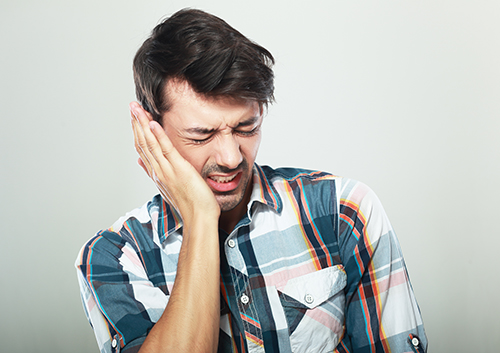

What to Know if You Think You Have a Cracked Tooth

May 13th, 2026

You use your mouthguard for sports, wear a nightguard if you grind your teeth, and never bite down on solid objects. But even with all the care in the world, accidents happen. If we break a leg, our bones can regenerate tissue and knit together over time. A cracked tooth, on the other hand, can only be repaired, but will not heal. The right treatment is essential to protect your injured tooth. If you suspect you have a fractured tooth, what should you do?

Sometimes you know right away when you’ve cracked a tooth. A fall off a bike, a blow to the face on the basketball court, a bite of something that turned out to be much harder than it should have been—the results can be instantly apparent. If you have a broken or chipped tooth, call our Eagle River office immediately. If you have lost a piece of your tooth, bring it in with you. Early treatment can not only restore the appearance of your tooth, but might prevent the possibility of infection or damage to the root and pulp.

Sometimes, a fractured tooth is an unwelcome surprise. It doesn’t take one specific incident to cause damage to a tooth. A crack or break can develop over time if you grind your teeth, have a large filling that has compromised a tooth, or have undergone a root canal procedure that has left the tooth brittle.  You might notice a crack or a missing piece of tooth, or experience pain while chewing or sensitivity to heat and cold. If you have any of these symptoms, call us. Once again, the earlier a tooth is treated, the better the outcome.

No matter how you discover an injury, immediate treatment by Drs. Darrin and Greg Gremban is the best way to safeguard your healthy smile. Prompt treatment and restoration repair your smile cosmetically, and, in the case of more serious fractures, extend your tooth’s life, prevent further damage, and ward off potential infections of the gum and bone.

We have many options for restoring your damaged tooth, and our recommendations will depend on the type of injury your tooth has suffered.

  • Chips

It is important to bring any broken piece of your tooth with you because sometimes the piece can be reattached. If that is not possible, a small chip might only require bonding with a tooth-colored resin. A veneer is an option for a larger chip, or where a translucent, natural appearance is important. If the chip is deep enough, and there is pulp damage, we might suggest a root canal and a crown.

  • Broken Cusps

A lost cusp is a common result of injury, especially near a filling. If the pulp is unaffected, which is generally the case, a filling or crown can restore the appearance and function of the tooth.

  • Cracks through the Tooth

A tooth cracked from the chewing surface to the root presents a more serious problem. If the crack has extended to the pulp, but remains above the gum line, a root canal and crown can preserve the tooth. If the crack extends below the gum line, however, extraction might be necessary. Early cracks will eventually extend below the gum line, so early treatment is essential.

A tooth can also fracture from the root up. Any crack in the root is a serious matter, and often is not discovered until infection has set in. Extraction is a common recommendation, although some specific cracks near the tip of the root might be treated with endodontic surgery.

  • Split Tooth

Sometimes an untreated vertical crack can lead to a tooth split into two pieces. An endodontist can determine whether any portion of the tooth can be saved, although extraction is more likely.

If you injure your tooth, or have any symptoms of a tooth fracture, call us immediately. Whether you have suffered a chipped tooth, a broken cusp, crown or root fractures, or even a split tooth, prompt treatment is the best way to restore and protect your attractive and healthy smile.

It’s Root Canal Awareness Week

May 6th, 2026

“I’d rather have a root canal!”

That’s the common go-to response to anything unpleasant. But, because the second week of May is “Root Canal Awareness Week,” let’s see if we can take some of the sting out of that cliché by examining just how much root canals actually improve lives!

The pulp chamber and root canals inside each tooth hold the tooth’s pulp, which is living tissue made of nerves, blood vessels, and connective tissue. Nerves and blood vessels in the chamber travel through the tooth’s roots, emerging from a small opening in each root tip to connect to your nervous and circulatory systems.

When the pulp inside your tooth is inflamed because of trauma or infection, it’s a condition called pulpitis. Swelling and pressure inside the tooth cause pain, which can be quite severe. If the tooth is left untreated, infection can spread and lead to bone, tissue, and tooth loss.

A root canal procedure treats irreversible pulpitis. You might need a root canal because an injury or trauma has damaged the root’s pulp. Or because a deep cavity or crack in the enamel has exposed the pulp tissue to bacterial infection. Or because serious gum disease has spread to the pulp via the tooth’s roots.

While severe tooth pain is often a symptom of pulpitis, you should see Drs. Darrin and Greg Gremban if you experience any symptoms which might indicate pulp trauma or infection:

  • Persistent tooth pain, which can be either dull or sharp and severe
  • Pain when chewing or when pressure is placed on the tooth
  • Prolonged sensitivity to heat or cold
  • A cracked, broken, darkened, or discolored tooth
  • Gum tissue near the tooth which is sore, red, or swollen
  • A pus-filled bump, called an abscess, on the gums which persists or keeps recurring.

If you’ve been postponing a trip to the dentist because you’re anxious about root canal treatment, talk to your dental team at Gremban & Gremban Dental in Eagle River about the various sedation options available to provide you with your most comfortable experience.

The root canal procedure itself is safe and straightforward:

  • The area around the tooth is numbed.
  • The dentist makes a small opening in the crown to allow access to the pulp inside.
  • Very small instruments are used to remove infected and dead or dying tissue in the pulp chamber and root canals. The interior of the tooth is cleaned.
  • The inside of the tooth and each root is shaped, filled with a biocompatible filling, and sealed.
  • A temporary filling or crown is placed on the tooth to prevent food particles and bacteria from entering the site while a permanent crown is created.
  • A permanent crown shaped and tinted to match your natural teeth will be placed at a later dental appointment.

The entire process usually takes from one to three visits. Any post-procedure discomfort or sensitivity typically lasts only a few days and is often treated with over-the-counter pain relievers like ibuprofen and acetaminophen, warm saltwater rinses, and ice packs. Drs. Darrin and Greg Gremban will give you detailed instructions for your personalized aftercare.

With all this new information in mind, maybe it’s time to reframe the conversation about root canals!

I’d rather have a root canal . . . than suffer pain.

When a tooth is badly infected or damaged, the pain can be excruciating. Root canal procedures remove the cause of that pain, and many patients feel relief immediately after treatment.

I’d rather have a root canal . . . than lose a tooth.

Losing a tooth can affect your bite, your tooth alignment, your ability to eat, your speech, and your self-confidence.

I’d rather have a root canal . . . than damage my overall health.

Untreated tooth and gum infections can spread to other parts of the body, causing jawbone, face and neck, and, potentially, system-wide infection.

Timely dental care is essential for a lifetime of healthy smiles. If your dentist recommends root canal treatment, get all the facts on just how this procedure can protect and improve your dental health.

So, final thoughts on root canal procedures? They relieve our pain. They save our teeth. They can even safeguard our health. Just something to be aware of, this week and year-round!

Canker sores, cold sores, and mouth sores: What's the difference?

April 29th, 2026

At Gremban & Gremban Dental, we know many people have experienced some form of mouth sores or irritation. Some mouth sores are harmless and go away on their own after a few days, while others are more serious and should not be ignored. Mouth sores occur for many different reasons, but bacterial infections, viruses, or funguses often trigger them. The best way to tell the difference between a canker sore and a cold sore is that canker sores occur inside the mouth while cold sores occur on the outside the mouth.

The most common mouth sores are:

Canker sores: A non-contagious, small, grayish ulcer with a red border, canker sores appear inside the mouth. While outside factors such as stress, fatigue, or allergies may increase the chances of developing a canker sore, most health experts believe they stem from bacteria or a virus that attacks the immune system. Canker sores typically heal within a week or two.

Cold sores: Also called fever blisters, cold sores are contagious groups of fluid-filled blisters that often erupt around the lips and sometimes under the nose or around the chin. Cold sores are the result of the herpes simplex virus, and once infected, the virus remains in the person’s blood stream.

Leukoplakia: A potential warning sign of oral cancer, leukoplakia is a premalignant lesion that appears as a white patch on the inside of the mouth, tongue, or gums. The lesions, which are caused by excessive cell growth, usually afflict those who smoke tobacco. Drs. Darrin and Greg Gremban may choose to have the lesion biopsied if the outbreak appears severe.

Oral candidiasis: Also called oral thrush or moniliasis, this condition is caused by the overgrowth of a type of yeast called candida. Common symptoms of oral candidiasis include white spots inside the mouth and on the tongue, redness or discomfort in the mouth area, sore throat,difficulty swallowing, and cracking at the corners of the mouth. It is important to visit Drs. Darrin and Greg Gremban if you have oral candidiasis. If left untreated, it may infect your bloodstream, which can be very dangerous. Healthy adults do not usually get thrush, and the condition is most often seen in infants, the elderly, patients undergoing chemotherapy, or people with AIDS or other diseases that are known to weaken the immune system.

Should you have a mouth sore that lasts a week or longer, we encourage you to give us a call and schedule an examination at our Eagle River office.

Back to top