Gremban & Gremban Dental

Improving your smile

office
phone
  • 865 North Railroad Street
    Eagle River, WI 54521
  • (715) 479-6100

Our Blog

Beneficial Beverage or Damaging Drink?

March 25th, 2026

Talking about a healthy diet usually means talking about food. After all, our teeth and gums need protein, vitamins, and minerals to stay strong and free from cavities and gum disease. But let’s not forget the part liquids play in our diets! What we drink can actually have a dramatic effect on our dental health.

Beneficial Beverages for Our Teeth and Gums

  • Water, water, water!

Water is always a healthy option. Besides being a nutrient in its own right, water washes away food particles as we eat, dilutes the acids in our mouth that can lead to cavities, and often provides the fluoride, which reduces our risk of tooth decay. Also, water helps with the production of saliva, which cleanses our mouth and helps neutralize the acids which cause cavities, gum disease, and bad breath.

  • Milk

Milk provides the calcium and vitamin D that are essential for bone and tooth health. If you are worried about the fat content in milk, low-fat options will still deliver the nutrients your body needs.

  • Vegetable juices

These juices provide important vitamins and minerals without the sugar levels of fruit juices. If that 100%-leafy-green smoothie is a bit bitter, add a small amount of fruit to the mix, but remember to avoid too many acidic, sugary additions.

Drinks that are Less than Ideal

  • Sugary beverages

Regular soft drinks, fruit juices, energy drinks, and sweetened tea and coffee provide bacteria with the sugar they use to produce acids. These acids, over time, weaken our enamel and lead to cavities.

  • Acidic drinks

Any acidic beverages, such as soft drinks, sports drinks, or citrus juices, provide their own acids that can erode tooth enamel.

  • Drinks that stain our teeth

Red wine, coffee, black tea, fruit juices, colas—even sports drinks!—can leave our enamel stained and discolored.

Should we give up all these problem drinks completely? Can’t we start our day with orange juice and a cup of coffee, or down an energy drink after a workout? The important takeaway here is to recognize which drinks can damage teeth and gums, and to minimize any harm they might cause. If you are going to drink something sugary or acidic, don’t sip it. Sipping lets the sugars and acids linger in the mouth. Drink with a meal. Chewing increases saliva production, which helps wash away harmful sugars and acids. Try using a straw for drinks that stain teeth. And it’s always best to rinse with water immediately after drinking anything sugary, acidic, or staining.

Best of all, try to include as many nourishing beverages as possible in your diet. Keep your mouth healthy with a steady routine of brushing and flossing for at least two minutes twice a day. Don’t forget to schedule regular checkups and cleanings at our Eagle River office so Drs. Darrin and Greg Gremban can monitor your teeth and gums and remove plaque and stains if they develop. And if you have any questions about the healthiest beverages out there, let’s have a glass of water and discuss.

Best Ways to Prevent Bad Breath

March 18th, 2026

Nobody likes bad breath, and although it can sometimes be difficult to tell if you have it, it is always better to practice good oral health than risk having a smelly mouth. There are many ways to reduce or eliminate bad breath, some are definitely more effective and longer lasting than others. Check out ways to do so below.

Floss Regularly

As difficult as it can be to remember to floss regularly, when it comes to bad breath, flossing is one of the easiest and most cost effective ways to freshen your mouth. See, flossing reduces the plaque and bacteria found in areas of your mouth that a toothbrush simply can't reach, and in turn, it rids your mouth of the smell associated with that bacteria. While flossing may not eliminate bad breath on its own, if you do it along with other health oral hygiene habits like brushing, then you may just develop a fresher smelling mouth.

Use Mouthwash

Using some sort of mouthwash can really freshen up your breath, especially if you find it still smells after brushing and flossing. There is a wide variety of mouthwash products on the market, however, you can also create your own by simply using baking soda mixed with water.

Always Brush after You Sleep

Whether after taking a nap, or having a full night of sleep, you will want to brush your teeth in order to reduce bad breath. The truth is, bacteria accumulates in your mouth while you are sleeping (even during a short nap) and that is ultimately the source of bad breath. So next time you wake from a good slumber, give your mouth some brushing and you will find it makes a big difference in the freshness of your breath.

There are many ways to freshen your breath beyond just using gum or mints, the above mentioned are just a few for you to try. Test them out and you will likely find your bad breath problem is solved, or at least considerably reduced. Of course, you can always ask Drs. Darrin and Greg Gremban at your next visit to our Eagle River office.

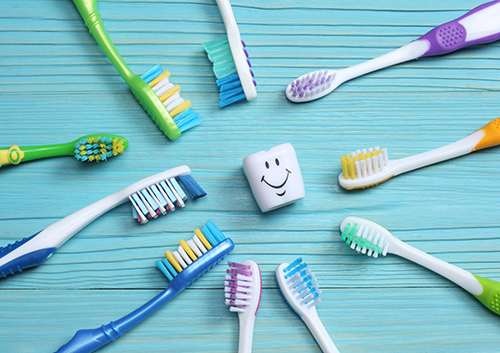
Seven Ways to Repurpose Old Toothbrushes

March 11th, 2026

It’s done a wonderful job for you, but after three or four months, the time has come to retire your toothbrush. Bristles that once easily removed food particles and plaque have become frayed and just aren’t as effective. But now that you’re regularly changing out your toothbrush, what to do with those retired brushes besides add to the local landfill? Check out some recommendations from Drs. Darrin and Greg Gremban for some second career options for that old toothbrush.

Make Your Jewelry Shine

A gentle brush with your favorite jewelry cleaner and your old brush will remove dirt from small spaces and filigree that a cloth just can’t reach. Do check that brushing is safe for your jewelry—pearls, for example, are not a good candidate.

Keep Your Woodwork Dust-free

Keep the details on your wood trim dust free with an old toothbrush. Baseboards are some of the hardest places to keep clean—even vacuums have difficulty getting dust and dirt out of trim. But an old toothbrush is perfect for cleaning the top, the grooves, and the inside corners of your baseboards. You can also remove dust from around door trim and inside window tracks.

Polish Sinks and Faucets

Use a repurposed toothbrush to remove build-up where the base of your faucet meets the sink, or around levers and handles. And don’t forget the metal ring around the drain!

Clean Kitchen Gadgets

Those miniature blades in your coffee maker or blender, the tiny holes in your cheese grater, the micro-openings in your microplane—small cleaning jobs need small tools! Try an old brush the next time you have a mini-cleaning problem.

De-grease Appliances

And while we’re in the kitchen, don’t forget your appliances. A toothbrush can clean grease around dials, handles, and knobs where a sponge can’t reach.

Refresh Your Grout

There are special brushes made just for scrubbing grout, but give your old brush a try first. Use your regular cleaning solution or paste for fresh, clean grout lines on your tile floors and counters. 

Keep Your Technology Sleek

Your keyboard has a busy life and it shows! Keep the spaces between your keys dust and crumb free with a clean, dry toothbrush. The next time you’re detailing your car’s interior, try a toothbrush for cleaning around buttons and dials on your dash. And don’t forget your remote controls, or any other place where keys, knobs, and buttons collect dust.

There’s still a lot of life left in that toothbrush! If you choose to reuse, do be sure to thoroughly clean your toothbrush before it transitions to another housekeeping detail. It’s worth the effort—your old brush will prove useful in any number of new ways, and your home—and the environment—will thank you!

Why Visiting the Emergency Room for Your Dental Problem isn’t a Good Idea

March 4th, 2026

Emergency rooms are for emergencies, so before you head to the hospital because of a dental problem, you need to ask yourself this question: Is what you're experiencing really a medical emergency? While emergency room visits for dental related issues are on the rise across the United States , they’re not necessarily the best solution for every problem. Many people don't know about emergency dental care services, many of which are available 24/7, and so they go to the ER.

These types of statistics are common across the country. However, despite the numbers, not all dental problems are created equal. If you've experienced some type of injury to your mouth, jaw, or face, then an ER visit is a good idea, but if you're suffering from a toothache, cavity, or broken crown or veneer, then the ER is not the best place to handle the situation. If you're having a dental emergency, then seeking emergency dental care should be your course of action.

Seeking Long-Term Solutions

The ER doesn't provide a long-term solution to your dental issue; it only gives you temporary relief. There’s a chance they will simply hand you a prescription for pain medication and tell you to call your dentist in the morning. In the end, you’re going to be saddled with two medical bills, and nobody wants that. Even if the ER outfits you with a temporary crown or filling, you're still going to have to make a follow-up appointment our office.

There are numerous homemade remedies that can sooth tooth and gum pain. However, if you're experiencing a dental emergency, the ER is not the place to go. The specialized emergency team at Gremban & Gremban Dental is available to take care of every dental problem you may have. In the case of a dental emergency, don't wait any longer than necessary. Feel free to contact our Eagle River office at any time, day or night.

Back to top