Gremban & Gremban Dental

Improving your smile

office
phone
  • 865 North Railroad Street
    Eagle River, WI 54521
  • (715) 479-6100

Our Blog

The Best Snacks for a Healthy Smile

February 25th, 2026

One of the most frequent questions that Drs. Darrin and Greg Gremban and our team hear is about what kinds of snacks are best for a child’s dental health. Sugary snacks are inevitable sometimes, but it’s vital for you as a parent to monitor how frequently your child is eating the kinds of snacks that may give him or her a cavity or two down the line.

Unsurprisingly, the best snacks are healthy ones, though they may not always be the most appealing to your little ones. The good news is that healthy doesn’t mean you have to compromise on taste. Once your kids give these tasty snacks a go, they might become open to all things healthy!

  • Fresh veggies and hummus
  • Apple wedges with peanut butter
  • Low-fat yogurt with berries
  • Cubes of cheese and crackers
  • Hard-boiled eggs with a little bit of salt and pepper
  • Celery sticks with cream cheese and sunflower seeds
  • A homemade milkshake with low-fat milk (or almond milk), the fruit of their choice, chia seeds, and cinnamon
  • Lean proteins such as chicken breast, fish, and turkey

These snacks aren’t high in sugar but they contain all the nutrients your children need to have the necessary energy throughout the day.

This is only a sample of all the great, healthy snacks out there for your kids. For more ideas, ask us the next time you visit our Eagle River office. It’s never too early to create healthy habits; they’re not only good for oral health, but overall health too. That’s a win-win, if you ask us.
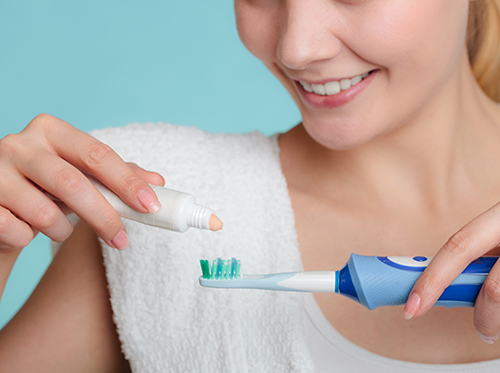

Pick the right electric toothbrush!

February 18th, 2026

The electronic toothbrush has undergone several technological advances since the 1960s. Everything from design and bristle motions to rotation, oscillation, and sonic vibration has led to dramatic changes in this necessary tool over time.

Rotation oscillation happens when the head of the toothbrush rotates from one direction to the other. The benefit of powered toothbrushes is that they can produce 50,000 strokes per minute, compared to 300 strokes with a manual toothbrush.

When you’re thinking about brush head size, smaller brush heads are best for hard-to-reach areas and small mouths. Brush heads should be replaced every three to six months as needed. A good way to save money is to designate a brush head for each family member which can be taken on and off a shared base motor.

Having a base motor or rechargeable toothbrush can deliver enough power on a full charge for a week of brushing, which makes it convenient for travel or when life gets busy. Some toothbrushes include audible signals that let you know when to switch the area of your mouth you’re brushing or when a full two minutes has gone by.

Do you have sensitive teeth? Studies have indicated that people tend to apply more pressure on their teeth when they use a manual toothbrush. This makes an electric toothbrush a preferable option if you’re having issues with sensitive teeth or gums.

There are even electric models with pressure sensors that will stop the brush from spinning when you press too hard against your teeth!

Everyone can benefit from having an electric toothbrush. A large handle size can be taken into consideration if a member of the household is young, or has a physical disability or arthritis. They’re even recommended for children in order to maintain good oral hygiene from a young age.

Biofilm is a term used for plaque or debris that builds up in your mouth. If not properly addressed, this can cause serious bacterial infections to your gums and teeth. If you want to remove biofilm in the most efficient way, an automatic toothbrush is the way to go.

When you're ready to make your decision, make sure to consult with Drs. Darrin and Greg Gremban at our Eagle River office to decide which electric toothbrush is right for you!

Valentine's Day History

February 11th, 2026

Valentine’s Day is best known as a celebration of love in all its forms. Pink hearts, red roses, and cute greeting cards adorn every surface you see. What many people don’t realize is that the modern Valentine’s Day celebration arose from a religious holiday.

St. Valentine’s Day was originally celebrated as a religious feast day in honor of early Christian martyrs. Three martyrs named Valentine were honored: a priest in Rome, the persecuted bishop of Interamna (a town in central Italy), and a saint martyred in Africa. This saint’s day was celebrated throughout Christendom, although it was removed from the Roman Catholic Calendar of Saints in 1969.

The origin of Valentine’s Day as a holiday for lovers began with Geoffrey Chaucer in his 1382 poem “Parlement of Foules.” Chaucer wrote, “For this was on Saint Valentine’s Day, when every bird cometh there to choose his mate,” and the modern romantic holiday was born. William Shakespeare and other writers mentioned Valentine’s Day as a day of love.

Valentine’s Day as we know it came about in the early 19th century. In Victorian England, printers began manufacturing small numbers of cards with romantic verses, lace, ribbons, and other frills. Anonymous Valentine’s Day card were a popular way for young lovers to exchange romantic sentiments in an otherwise prudish time. As the 19th century progressed, printers began mass manufacturing Valentine’s Day cards. People in the United States give an estimated 190 million valentines every year, and up to one billion if you count children exchanging cards at school! With the rise of the Internet, Valentine’s Day e-cards have become a popular mode of communication, with millions of e-cards sent each year.

The other items associated with Valentine’s Day include chocolate and flowers. The tradition of giving chocolates has been around for decades, and Richard Cadbury created the first box of Valentine’s Day chocolates nearly 150 years ago. Today, purchases of chocolate total over $1 billion in the United States alone, with 35 million heart-shaped boxes sold each year. Loved ones also exchange flowers, with red roses being associated with Aphrodite, the Greek goddess of love. On Valentine’s Day itself, florists sell nearly 200 million stems of roses.

Although many people dismiss Valentine’s Day as a commercialized “Hallmark holiday,” it is beloved to couples and romantics across the United States and other countries. The team at Gremban & Gremban Dental wants to remind all patients that no matter what your celebratory plans, February 14th can be a wonderful day to celebrate the loved ones in your life. Happy Valentine’s Day!

February Is Children’s Dental Health Month

February 4th, 2026

It’s the littlest month of the year, so what better time to think about the dental health of our littlest family members? February is National Children’s Dental Health Month, and we’re here to suggest some of the best dental habits for healthy childhood smiles.

Babies 

  • Even before your baby cuts her first adorable tooth, you can start proactive dental care by gently wiping little gums with a clean, moist gauze pad or soft cloth twice a day. This removes bacteria and food particles and helps prepare your baby for brushing.
  • When that first tooth does appear, or by age one if it hasn’t yet erupted, it’s time to schedule a visit to the dentist. At this first visit, your child’s dentist will check jaw and tooth development and can give expert guidance on teething, brushing, how much and which kind of toothpaste to use, and topics like thumb-sucking and pacifier use.
  • When baby teeth arrive, use a small soft-bristled toothbrush designed to fit comfortably in tiny mouths.
  • Use toothpaste as recommended. Children under the age of three who use paste should use a very small amount, no larger than a grain of rice.
  • Prevent “baby bottle tooth decay”—don’t put your baby to bed with a bottle. This allows the sugars in formula or, when your child is 12 months or older, milk, to bathe the teeth throughout the night. And babies and toddlers never need sugary juices or sodas in those bottles!

Toddlers 

  • Help your child develop a positive relationship with his dental team. Read books or watch videos to help your child learn what to expect. Practice with him by having him open his mouth while you count his teeth. Plan visits when your child isn’t hungry or tired. Be positive yourself—your child will take his cues from you!
  • Schedule regular appointments for exams and cleanings. Drs. Darrin and Greg Gremban will check tooth and jaw development, look for any signs of decay, and evaluate potential problems such as prolonged thumb sucking or pacifier use. 
  • By age three, children have most or all of their baby teeth. Use a soft bristled brush to clean your child’s teeth twice each day. As she grows, demonstrate how to brush properly. The dental team at Gremban & Gremban Dental will have some great ideas on technique!
  • Daily flossing should begin as soon as your child has two teeth which touch. 
  • Around age six, your child may be transitioning to solo brushing and flossing—but your oversight is still needed. Make sure all the surfaces of the teeth, including the tops of new molars, are brushed thoroughly. You might provide a timer or a two-minute song or video to make sure your child spends enough time brushing. Flossing can be tricky for young hands, so you’ll need to help with that task for a few years more.

School-Aged Children

  • Dentists and orthodontists recommend a first visit to the orthodontist by age seven, or earlier if you notice your child has trouble chewing or biting, if the teeth don’t seem to fit together properly, or if you have any concerns about bite and alignment. When potential problems are discovered right away, early intervention can prevent more serious orthodontic issues from developing later. The team at Gremban & Gremban Dental in Eagle River is happy to answer any questions you might have about early interventions!
  • Talk to Drs. Darrin and Greg Gremban about sealants. Permanent molars usually erupt between the ages of 6 and 12. Sealants are thin coatings which protect the chewing surfaces of these molars from food particles and cavity-causing bacteria which would otherwise collect inside grooves in the enamel.
  • Children who play sports and engage in activities with a chance of physical contact should have a well-fitted mouthguard to protect their teeth. Be ready to replace it as often as recommended by Drs. Darrin and Greg Gremban or if it’s damaged.
  • Increases in hormones during puberty can lead to puberty gingivitis, and swollen, red, and bleeding gums can be the result. Proactive dental hygiene will prevent gum disease from developing. Make sure your child brushes two minutes, twice a day, and flosses once per day. If symptoms persist, it’s time to see the dentist.
  • If your child is beginning orthodontic treatment, you can help make the journey easier. Keep up with appointments and adjustments, look for toothbrushes and floss designed for braces, and provide braces-friendly foods. If your child wears bands or aligners, you may need to remind her to wear them for the recommended number of hours each day. 
  • A nutritious diet is essential for healthy teeth and gums. Give your child solid nutritional building blocks with a diet rich in proteins, vitamins, and minerals. 

Help your child enjoy a future of healthy, confident smiles by working in partnership with your child’s dental team. They are ready every month of the year with advice and expertise to make that healthy dental future a reality!

Back to top