Gremban & Gremban Dental

Improving your smile

office
phone
  • 865 North Railroad Street
    Eagle River, WI 54521
  • (715) 479-6100

Our Blog

Does Your Child Need Endodontic Treatment?

May 27th, 2020

Baby teeth come with a built-in expiration date. That charming first smile is meant to make way for a healthy, beautiful adult smile. Unfortunately, before they are ready to make way for permanent teeth, primary teeth can be affected by decay, trauma, or infection—problems which can lead to damage to the pulp within the tooth. If your dentist tells you that your child’s tooth needs specialized endodontic treatment, is treatment really that much better for your child than losing a baby tooth prematurely?

Quite often, the answer is yes!

Baby teeth do much more than serve as temporary stand-ins for adult teeth. They are essential for:

  • Biting and chewing—a full set of baby teeth helps your child develop proper chewing, which leads to healthy digestion. And chewing also helps build face and jaw muscles.
  • Speech development—primary teeth help guide speech production and pronunciation.
  • Spacing—a baby tooth serves as a place holder for the adult tooth waiting to arrive. If a primary tooth is lost too early, the remaining baby teeth may drift from their proper location. This, in turn, can cause overcrowding or misalignment of the permanent teeth when they do erupt.

Baby teeth, like adult teeth, contain living pulp tissue. The pulp chamber inside the crown (the visible part of the tooth) and the root canals (inside each root) hold nerves, blood vessels, and connective tissue. When the pulp is damaged by trauma or infected, a baby tooth can still be saved with endodontic treatment. Endodontic treatment in baby teeth can take two forms.

  • “Vital” pulp is pulp that can be saved. Vital pulp therapy uses procedures to deal with damaged pulp inside the crown, or visible part, of the tooth. Pulp therapy can be used on teeth when only the top of the pulp has been affected by decay, limited exposure, infection, or trauma, but the root pulp remains healthy. Specific treatment will depend on the nature of the pulp injury, and a crown will usually be placed over the tooth after treatment to protect it.
  • With non-vital pulp, your dentist will probably recommend a traditional root canal procedure. All of the pulp tissue will be removed from inside the crown and the roots, and the pulp chamber and root canals will then be cleaned, disinfected, shaped, and filled. Finally, because the treated tooth will be more fragile, a crown will be used to protect the tooth from further damage.

There can be good reasons for extracting a seriously damaged baby tooth, and there are situations where preserving the tooth is the best and healthiest option for your child. Discuss your options with Drs. Darrin and Greg Gremban when you visit our Eagle River office for the safest, most effective way to treat your child’s compromised tooth.


Educational and Entertaining Enamel Experiments

May 13th, 2020

Let’s talk about the science of our teeth for a moment. Our enamel has a very high mineral content, making it extremely strong.  In fact, enamel just happens to be the hardest substance in our bodies.  But, unfortunately, it is not indestructible! Certain foods we eat can actually damage the surface of our teeth. Some simple and entertaining experiments can show children how our teeth can be affected by things we eat and drink, and how we can help protect them.

If you have a science-minded student at home, there are many activities you can do together, using educational websites, common household products and lots and lots of eggs. (Why eggs? Eggshells are a great substitute for teeth in these experiments. Not only are they various shades of white--like our own teeth, they are also calcium-rich—like our own teeth.) You can find any number of experiments using uncooked eggs, hardboiled eggs, whole shells with the contents blown out, or eggshells alone, so you can find just the right activity for whichever egg treatment works best for you.

Examine Enamel Erosion

One of the ways we protect our teeth is with healthy eating. The bacteria in plaque use the sugars and starches in our foods to produce acids. These acids are the substances that break down the minerals in our enamel and leave the enamel weaker. Weaker enamel is more easily attacked by bacteria and acids, which leads to cavities.

With eggs or eggshells and some carefully selected food products, you can see just how acidity affects teeth. Different websites suggest a variety of acidic liquids to dunk your eggs in, such as vinegar, soda, or citrus juices, so it’s easy to find an experiment that works with your pantry. Always use a plain water sample when you submerge eggs or shells to act as a control to measure differences against. How do the egg shells soaked in acidic liquids differ from those in plain water? It’s also fun to add simple sugar water as a test liquid to see what happens. Is it sugar or acid that causes more damage? And why might that be?

The Fluoride Fix

Fluoride is well known as a mineral that protects the structure of our teeth and helps prevent cavities. And there are actually experiments out there to test the protection fluoride provides using your egg stand-ins.

In some experiments, a hardboiled egg is coated with fluoride toothpaste or rinse for a specific amount of time and then dunked into vinegar. An untreated egg also gets a vinegar bath. You are asked to observe what is happening to each egg as it sits in its vinegar bath—are there bubbles on one egg and not the other? What do the bubbles mean? Other experiments require longer exposure to fluoride and then to vinegar—what happens to the shells of the treated and untreated eggs? What could this mean for our teeth?

Staining Studies

Our diet can do more than help create cavities. Enamel is very strong, but it is not stain-proof! Dark colored foods and drinks can make our teeth appear darker or more yellow. (And teeth that have suffered enamel erosion can pick up stains more easily.) How does food affect the brightness of our smiles?

If this question interests you, find experiments that use favorite beverages as a soak for your eggs. Choose liquids with a range of color, such as coffee, soda, and apple juice. Or choose an experiment that uses different varieties of soft drinks. Will foods the same color cause the same amount of discoloration in your egg volunteers? Do you want shorter or longer soaks in each liquid? Do you want to make use of a recycled toothbrush to see if brushing that discolored shell makes a difference? With toothpaste or without?

Even though these activities are designed for older children, they still require adult supervision. You can find detailed instructions for any of these experiments at many science and educational sites online. With some household supplies, plenty of extra cups, and a quantity of eggs, you and your child can demonstrate some of the basic effects our food choices have on the health and appearance of our teeth. It’s a wonderful way to promote healthy eating and brushing habits, scientific curiosity, and shared experiences!

Don’t forget to let Drs. Darrin and Greg Gremban know how your experiments turned out the next time you visit our Eagle River office!

Zirconia Dental Implants

May 6th, 2020

Since dental implants first started being implemented in the 1980s, they have been primarily made of titanium. Recent advances in implant technology have allowed dental implant manufacturers to shift from all-metal implants, to part-metal and part-ceramic implants, to the newer all-ceramic or zirconia implants.

Zirconia implants are made of high-impact resistant ceramic called tetragonal zirconia polycrystal (ZrO2+Y2O3). They remedy many of the issues and complaints doctors and patients have with traditional metal implants and have several advantages—let’s take a look at some of them.

Advantages of Zirconia Implants

  • Do not cause allergic reactions – Although titanium is considered non-toxic, some people still have allergic reactions to titanium. Zirconia implants are inert, non-corrosive, and hypoallergenic.
  • Have been used for decades in medical applications – Millions of patients have had zirconia used safely and effectively as the base material for their hip replacements. The zirconia used for medical applications also undergoes strict radiation monitoring to ensure its safety for use within the body.
  • They are incredibly strong – Unlike titanium implants, zirconia offers a much higher degree of resistance to scratching, corrosion, and fracture. The aerospace industry even uses zirconia (ZrO2) due to its high resistance to heat and fracture. This all means a safer and more aesthetically pleasing result for the patient.
  • One-piece design is more hygienic – Zirconia implants are a one-piece design, meaning there is nowhere for bacteria to build up or liquids to penetrate like with titanium implants. They are highly biocompatible (how a material reacts with the human body) which leads to healthier gums and no risk of corrosion.
  • Implant margin is at gum not bone level – With titanium implants the margin (or gap between the implant and the tooth) is at bone level, which can lead to bacterial buildup since you can’t brush there. The zirconia implant margin, which is at gum level, allows you to brush and clean your implant and restoration regularly.

If you are in need of a restorative dental implant, it would be wise to consider zirconia due to its many advantages. It might not work in every situation, but feel free to discuss your options with Drs. Darrin and Greg Gremban or one of our Eagle River staff members.

Cleaning Your Teeth—Time for a Refresher Course!

April 29th, 2020

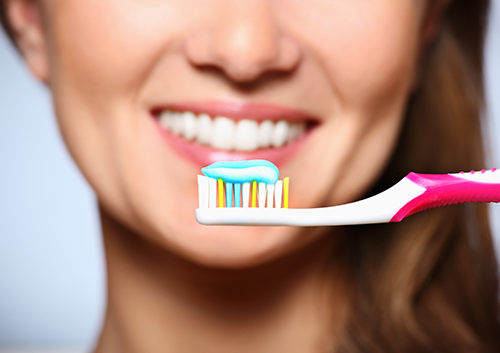
Let’s face it, by now, brushing our teeth is something we pretty much do on auto-pilot. A quick brush after breakfast, a minute or so at night, floss when we think of it. Done. But take a few minutes to review these cleaning tips, and see if a few small adjustments to your routine could make all the difference at your next checkup at our Eagle River office.

  • Tools

Some of us prefer brushing with a manual brush. Some like the electric brush for ease and comfort. Whichever form of brush you choose, be sure that it fits comfortably in your mouth, reaches everywhere it needs to, and has a handle that is easy to grip. There are many bristle options available, so if you are an energetic brusher, or if you have sensitive gums, try a soft bristled brush for gentler brushing.

If you haven’t been exploring the floss aisle lately, there are now many varieties available to suit your particular needs. Besides the traditional floss, there are coated flosses for easy gliding between teeth that fit closely together, dental tape-style flosses to fit teeth with wider spacing, and even flosses designed just for braces that thread between the wires and brackets. Talk to Drs. Darrin and Greg Gremban at your next cleaning for product suggestions if you think there’s an easier, more comfortable option out there for you.

  • Technique

With proper technique, any toothbrush and floss you choose will do a fine job of removing plaque.

Brushing? There’s a tried and true method for success. Place the toothbrush at a 45° angle at the gum line. Be sure to brush the outside, inside, and chewing surface of each tooth thoroughly. Remember the expression, “Massage, don’t scrub.” Over-vigorous brushing can actually irritate gum tissue and damage enamel. An electric toothbrush should provide a continuous brushing motion without needing any pressure from the brusher. This might be the model for you if you have a too-vigorous approach to brushing, or sensitive teeth and gums. If you like your manual brush, again, give a soft-bristled brush a try!

As for flossing? That harmless-looking little string can cause gum damage if used too forcefully. You can accomplish the placement and cleaning power you need by easing the floss down to the gumline and flossing with gentle pressure against the tooth surface. If you have any questions about technique, remember—we are always happy to let you know the best cleaning methods for your specific needs.

  • Timing

Of course, the best tools and the best technique in the world won’t be effective unless you put the right amount of time into brushing and flossing.

The standard rule is two minutes of brushing in the morning and two minutes at night. If you wear braces or have other special circumstances, we might recommend brushing after every meal. And if you brush after breakfast, give your teeth half an hour or so to remineralize. This natural process uses the calcium and phosphate ions in your saliva to strengthen tooth enamel after it’s been exposed to any acidic foods in your breakfast.

Thorough flossing can be accomplished in a few minutes, and might be needed only once a day. But again, depending on your individual needs, we might have other recommendations. Let’s review what works for you at your next visit—we can tailor suggestions for a brushing routine to your unique needs.

It’s a great idea to review your brushing habits periodically to make sure you are getting the most out of those minutes you spend cleaning your teeth. There won’t be a test at the end of this review, and you won’t get a gratifying grade or a gold star. What you will get is much more important—better checkups, fewer cavities, and healthy teeth and gums. Happy cleaning!

Back to top